Home › Our equipment › Cassava
Processing cassava before it degrades
The cassava root is a demanding raw material: perishable within days, water-laden, abrasive and carrying cyanogenic compounds. Our equipment is sized to absorb the harvest within its useful window and to carry the detoxification process through to a stable, marketable product.
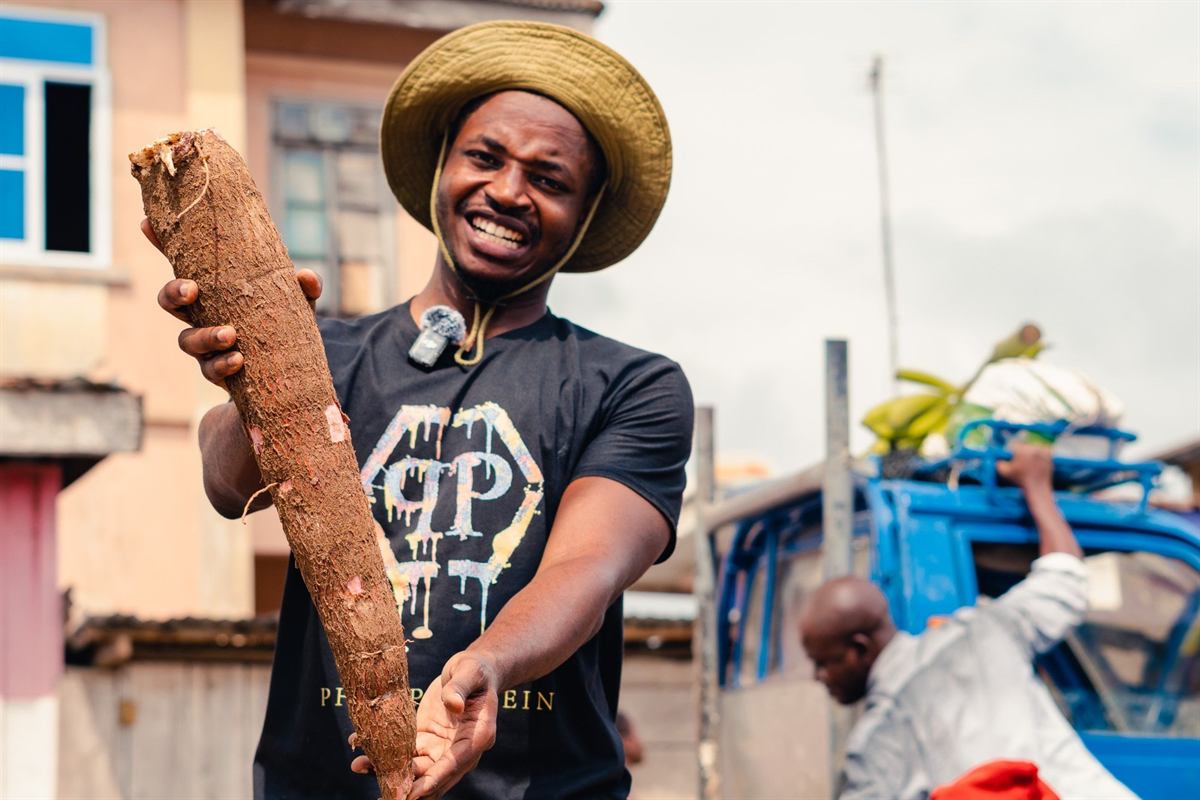
A race against physiological deterioration
From the moment it is lifted, the cassava root enters primary physiological deterioration: blue-black vascular streaks appear within twenty-four to seventy-two hours under an oxidative cascade, then microbial deterioration takes over. Beyond that window the root remains edible but loses its market value and its technological suitability — the starch degrades, the colour of the finished product dulls, extraction yield falls.
The whole design of a cassava processing unit follows from this constraint: the installed hourly capacity must match the daily supply that can be mobilised within a collection radius compatible with that seventy-two-hour limit. A machine twice too large never compensates for a production area that is too dispersed.
Two further constraints are specific to the material. First, potential toxicity: the cyanogenic glucosides, mainly linamarin, release hydrocyanic acid under the action of endogenous linamarase. Grating, which brings the enzyme and its substrate into contact, is precisely the step that triggers detoxification; pressing removes the soluble fraction, and fermentation and heat treatment complete the elimination. Second, abrasiveness: residual soil and the silica clinging to the skin wear the working parts prematurely if washing is neglected.
Processing window
24 to 72 hours after lifting before visible degradation of the root.
Initial water content
About 60 to 70 % wet basis, brought to 45 % by pressing and then to 10-12 % by drying.
Detoxification
Grating (enzymatic contact), pressing, fermentation and heat treatment act in sequence.
Wear of working parts
Prior washing directly governs the service life of grating plates and press screws.
Usual agronomic and technological orders of magnitude for the sector; the values used for a given installation are established after analysing the roots actually collected (water content, starch content, soil load).
Six operations, one logic: removing water and toxins
The line reads as a succession of separations: separate the soil, separate the free water, separate the coarse particles, then stabilise thermally. Each station is sized never to be the bottleneck for the next one.
Reception, washing and peeling
Roots are weighed, sorted and washed in a rotating barred drum, mutual abrasion loosening soil and outer bark. Additional peeling removes the periderm, the seat of a large share of the cyanogenic compounds.
Operating parameters
- Water consumption 1.5 to 3 m³/t
- Peeling loss 15 to 25 % by mass
- Drum speed 12 to 25 rpm
Grating
A drum fitted with perforated plates turning at high peripheral speed disintegrates the root into a fine pulp. The fineness obtained governs both the release of starch granules and the effectiveness of enzymatic detoxification.
Operating parameters
- Peripheral speed 20 to 35 m/s
- Specific energy 8 to 20 kWh/t indicative
- Target particle size mostly < 2 mm
Pressing and mechanical dewatering
The pulp is bagged or loaded into the press cage. The pressure rise must be progressive: a force applied too quickly blinds the surface layer and traps water at the core of the mass.
Operating parameters
- Final pressure 8 to 20 bar by product
- Cycle time 20 to 90 min (batch press)
- Outlet moisture 45 to 50 % wet basis
Cake breaking and screening
The compacted press cake is broken up then graded on a vibrating or rotary screen. Oversize is recycled; undersize feeds cooking or drying with a uniform particle size, the condition of even heat treatment.
Operating parameters
- Mesh aperture 0.5 to 1.5 mm by product
- Oversize recycled 5 to 15 %
- Vibration amplitude adjustable in operation
Cooking, roasting or drying
According to the target product: gari roasting on a hearth or heated screw with continuous mixing, steam pre-cooking for attiéké semolina, convective drying for flour, or flash drying for native starch whose granular structure must be preserved.
Operating parameters
- Gari roasting 120 to 160 °C, 15 to 25 min
- Flour drying 55 to 70 °C, forced air
- Native starch < 60 °C to avoid gelatinisation
Cooling, grading and packing
The product is cooled before bagging — packing a hot product causes internal condensation and moisture pick-up fatal to storage. Final screening, foreign body detection, weighing and sealing.
Operating parameters
- Final moisture 10 to 12 % (gari, flour)
- Bagging temperature < 35 °C
- Packaging PP/PE bags, big bags, sealed pouches
The ranges given are orders of magnitude for design drawn from process practice; they are adjusted for each installation once the raw material actually processed has been characterised.
10 machines in the catalogue
Each machine has its own detailed sheet: role in the process chain, operating principle, indicative specifications, installation requirements, maintenance and a direct quotation request.
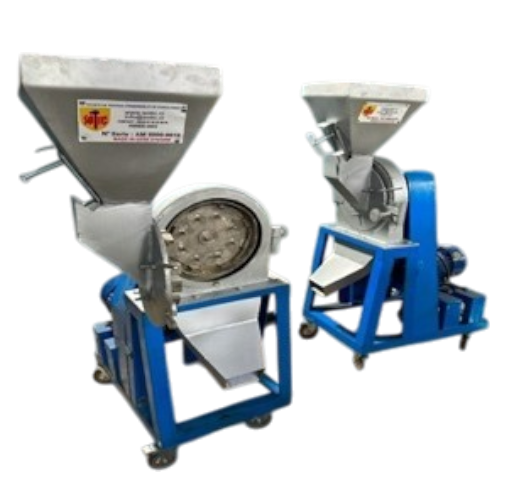
Fixed electric grater
Reduces the root to a fine pulp, as a fixed station with electric drive.
View the sheet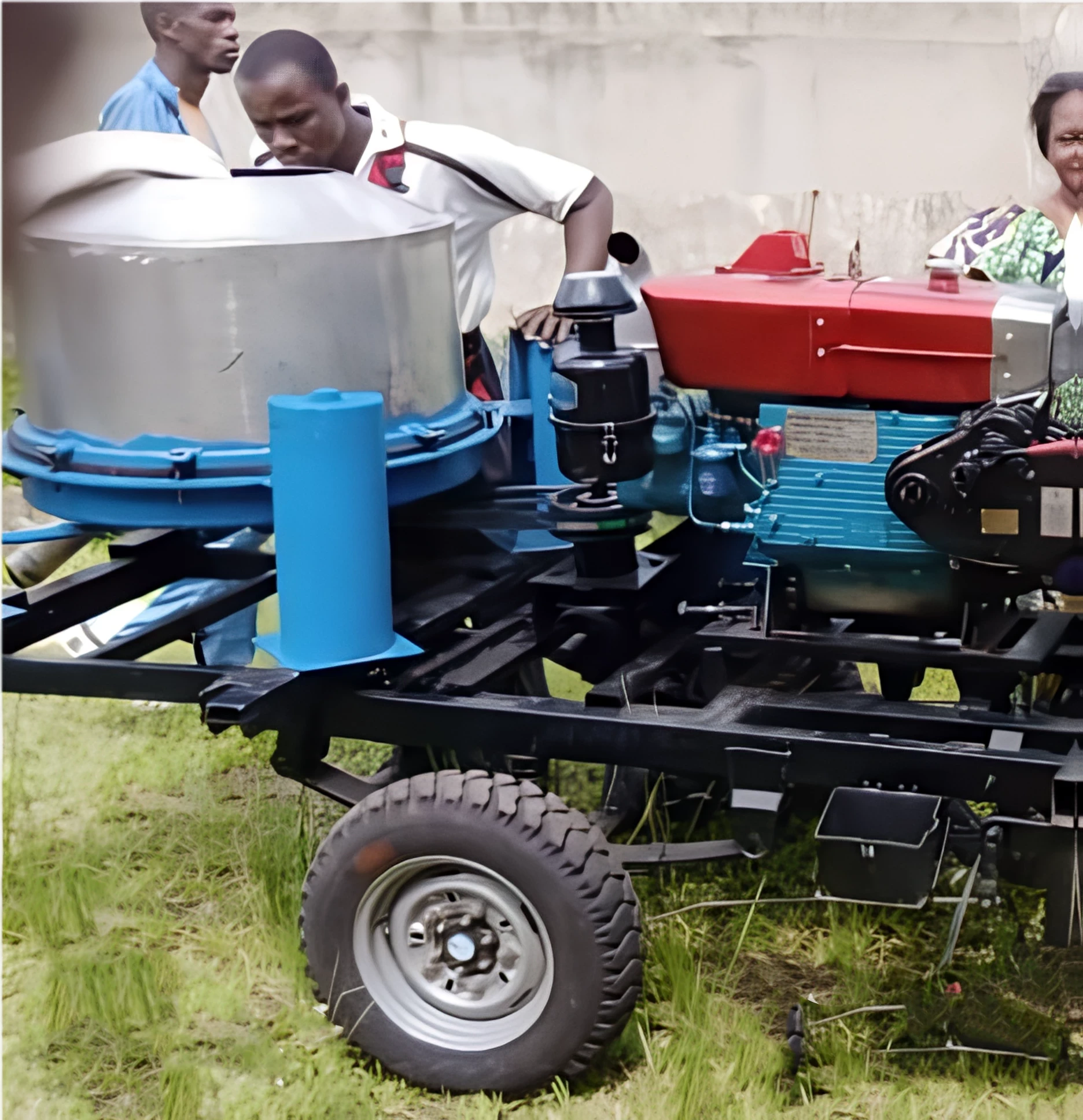
Mobile diesel centrifuge
Mechanical dewatering by centrifugal force, self-powered and movable from site to site.
View the sheet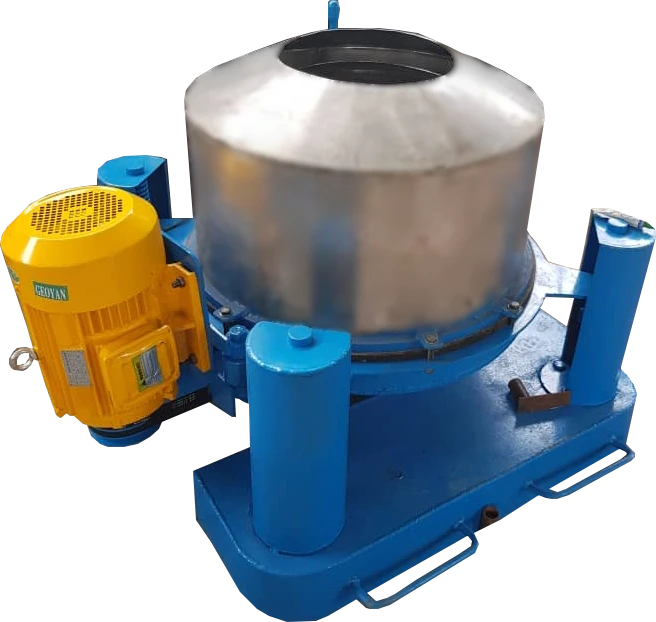
Fixed electric centrifuge
Centrifugal dewatering as a fixed station, for units with a stable electricity supply.
View the sheet
Semolina granulator
Granulates and grades cassava semolina for attiéké and placali.
View the sheet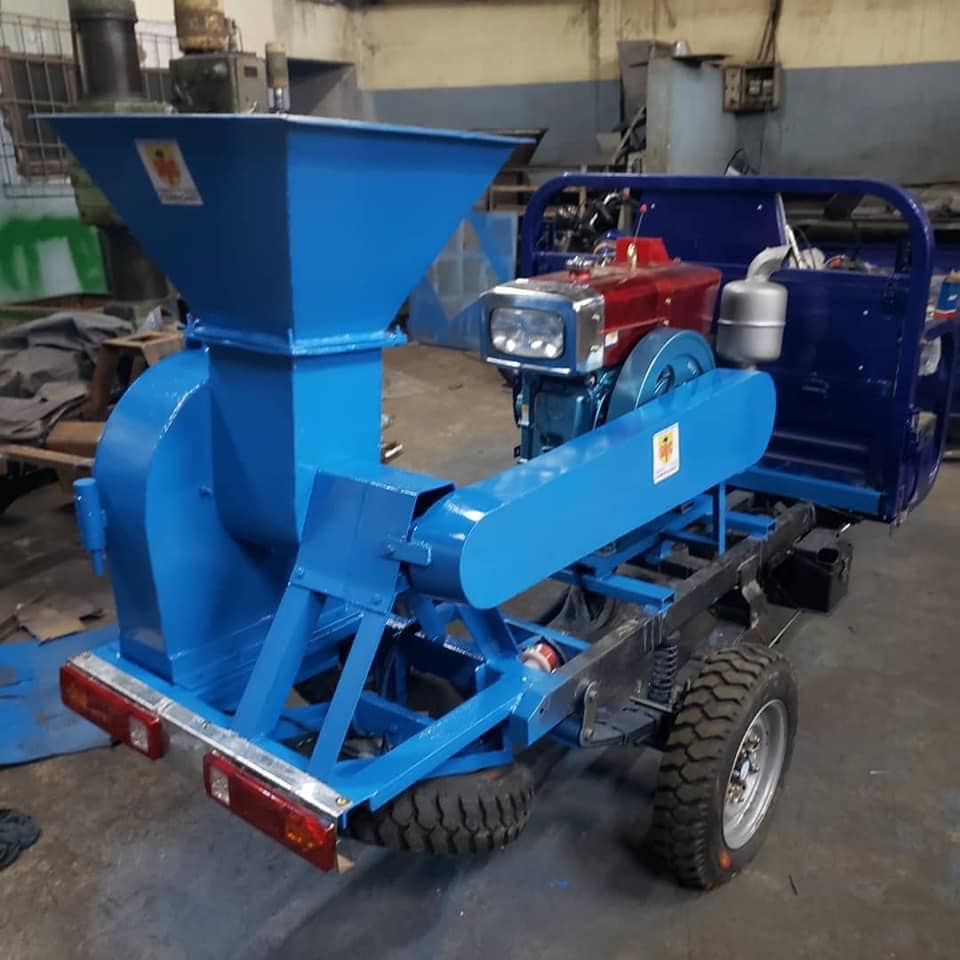
Mobile diesel grater
Self-contained grating unit on a towable chassis, to process the harvest close to the field.
View the sheet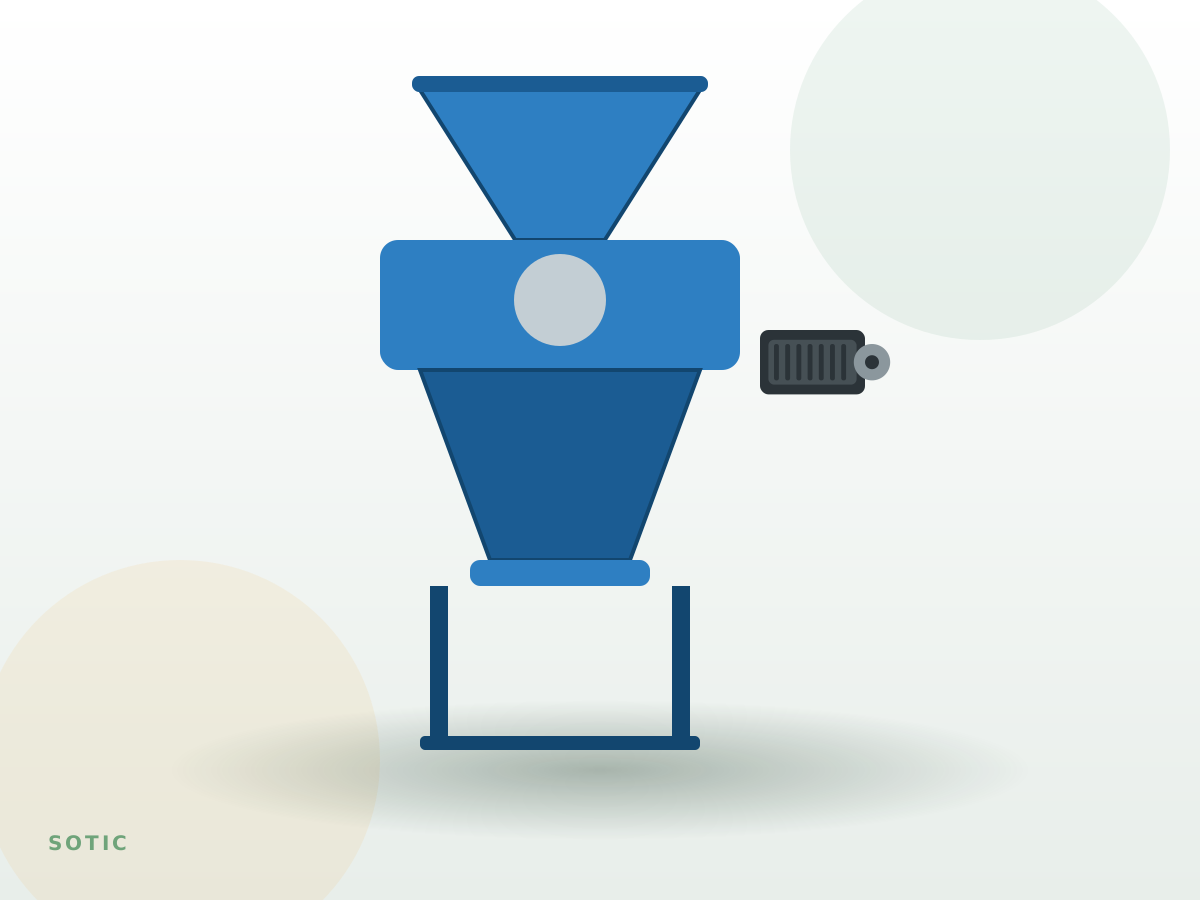
Cake breaker
Breaks up the press cake for even drying or roasting.
View the sheet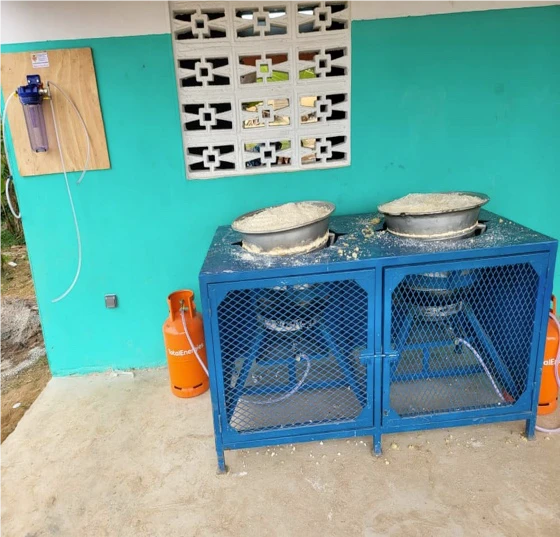
Gas cooking station
Cooking and roasting station with gas heating and temperature-controlled pans.
View the sheet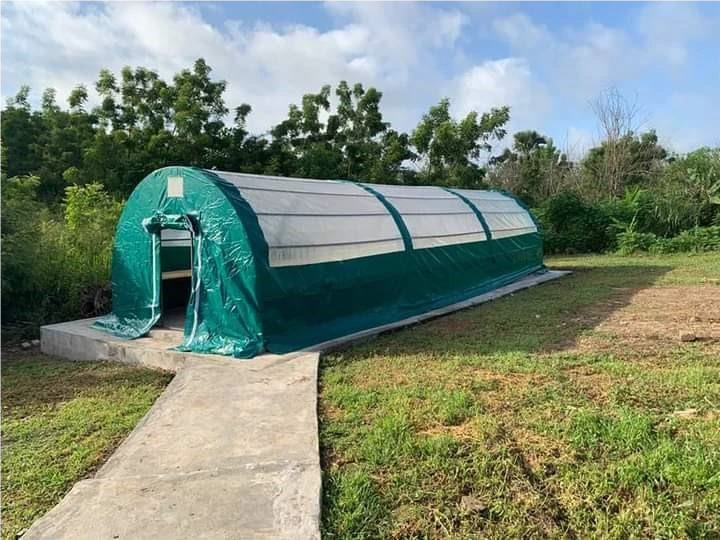
Solar drying tunnel
Sheltered solar drying: drying capacity at no energy cost.
View the sheet
Dehydration dryer
Tray dryer with indirect hot air, for guaranteed capacity whatever the season.
View the sheet
Screw press
Mechanical dewatering by progressive compression, the key station for the line's energy balance.
View the sheetIndividual machines and integrated lines
Each machine exists in several sizes. Assemblies can be supplied as a continuous line linked by conveyors, or as independent stations for a gradual build-up of capacity — a configuration often better suited to cooperatives.
Drum washer-peeler
Stainless barred drum on rollers, counter-current spray washing and mutual abrasion of the roots. Soil-laden water discharged by chute to a settling tank.
- Throughput 0.5 to 3 t/h
- Power 3 to 11 kW
- Contact materials AISI 304 stainless
- Water used 1.5 to 3 m³/t
Toothed drum grater
Balanced rotor fitted with interchangeable perforated plates, stainless casing, feed hopper with anti-return chute, interlocked cover cutting the drive when opened.
- Throughput 0.5 to 3 t/h
- Power 7.5 to 30 kW
- Peripheral speed 20 to 35 m/s
- Wear parts interchangeable grating plates
Hydraulic plate press
Welded frame, hydraulic cylinder with pressure limiter, distribution plates and effluent collection tray. Controlled pressure rise to avoid blinding.
- Load per cycle 150 to 600 kg
- Pressure 8 to 20 bar
- Cycle 20 to 90 min
- Outlet moisture 45 to 50 %
Continuous screw press
Reducing-pitch screw in a barred cage adjustable by counter-pressure cone. Suited to steady flows and to capacities above one tonne per hour.
- Throughput 0.8 to 4 t/h
- Power 11 to 30 kW
- Adjustment counter-pressure cone
- Operation continuous
Cake breaker and screener
Break-up of the press cake by beaters then grading on a vibrating or rotary screen with interchangeable meshes. Automatic recycling of oversize to the breaker.
- Throughput 0.3 to 2 t/h
- Power 2.2 to 7.5 kW
- Meshes 0.5 to 1.5 mm
- Frame painted steel, stainless contact
Heated screw roaster
Mixing screw in a trough heated by gas or biomass, with temperature control and a hood extracting the vapours. Designed to remove any direct operator exposure to the hearth.
- Throughput 80 to 500 kg/h
- Temperature 120 to 160 °C
- Energy gas, biomass or electric
- Product contact AISI 304 stainless
Trolley tunnel dryer
Insulated chamber, indirect hot air generator — the food never touches combustion gases —, forced ventilation and partial air recirculation to limit consumption.
- Capacity 200 to 2,000 kg/batch
- Temperature 50 to 80 °C adjustable
- Heating indirect, exchanger
- Final moisture 10 to 12 %
Starch extraction line
Fine grating, hydraulic extraction on jet screens, separation by settling or hydrocyclones, mechanical dewatering and flash drying preserving the granular structure of native starch.
- Root throughput 1 to 5 t/h
- Process water 5 to 10 m³/t
- Drying flash, product < 60 °C
- Whiteness depends on root-to-process delay
Attiéké / placali line
Controlled fermentation, pressing, cake breaking, granulation and steam pre-cooking stations, sized for steady output and controlled food safety.
- Throughput 100 to 800 kg/h
- Fermentation 12 to 48 h by starter
- Cooking saturated steam
- Cleaning dismountable stations
The stations described above complement the catalogue machines: they are studied, adapted or manufactured on request according to the configuration of your line. The values shown are usual design ranges for this type of equipment; contractual characteristics are established project by project by the SOTIC design office and are not a commitment at this stage.
What separates a good unit from a profitable one
With an identical process, the difference in results between two units comes down to four variables that we systematically examine at the study stage — and verify during the load acceptance test.
Material yield
From root to finished product, the cumulative losses at peeling, pressing and screening determine the cost per tonne. Every point of yield gained reads directly on the operating account.
Residual cyanide
The grating – pressing – fermentation – heat treatment sequence must be carried out in full. A shortcut on fermentation time or roasting temperature leaves a residue incompatible with health recommendations.
Particle size and regularity
An uneven product dries irregularly, keeps badly and sells for less. Control of screening and of oversize recycling governs the consistency of the grade delivered.
Hygienic design
Stainless contact surfaces, radiused corners, no retention zones, quick dismantling for cleaning: cleanability is designed on the drawing, it cannot be retrofitted in operation.
The machine alone is not enough
Every cassava project is treated as a whole: study, manufacturing, host building, commissioning, training and maintenance.
Sizing
Material and energy balance, process selection, target throughput, investment estimate and operating cost per tonne.
WORKSCivil engineering
Anchor blocks, slabs, effluent drainage, ventilation, separation of clean and dirty areas, electrical supply.
TRAININGLine operation
Operator training in settings, in-process quality checks and emergency stop procedures.
SERVICEMaintenance
Preventive maintenance plan, set of wear parts, corrective work and locally sourced spares.
cassava: what to check before investing
The question turns around: how much root can the cooperative reliably collect and deliver each day during the season? A 500 kg/h line runs eight hours a day if four tonnes of roots arrive daily. If real supply is two tonnes, the same line runs at half load, with amortisation and fixed costs unchanged. We always start from the available raw material to set capacity, never the other way round.
Yes, and it is often the soundest path. A configuration of independent stations — washing, grating, pressing, drying — allows a saturated station to be doubled without questioning the whole. It must, however, be planned when the building is designed: reserve the floor space, oversize the electrical supply and provide connection stubs. A building designed for a single line effectively rules out any economic extension.
Drying dominates the energy balance of a cassava unit. Evaporating the residual water requires of the order of 3 to 5 megajoules per kilogramme of water removed, depending on dryer efficiency. Three options are debated: gas, easy to control but dependent on supply logistics; biomass, relevant where agricultural residues are available on site, with an exchanger to prevent any contact between flue gases and food; and electricity, reserved for small capacities or finishing stages. The choice is settled on the cost of useful energy delivered, not on the purchase price of the equipment.
Yes, with one reservation: these products rest on a fermentation whose sensory outcome depends as much on the starter and the know-how as on the machine. The equipment brings regularity, hygiene and capacity; it does not replace mastery of the fermentation process, which must be formalised with the producer before sizing.
Let us size your cassava unit on your real supply
Tell us the tonnage of roots you can mobilise each day, the average collection distance, the energy available on site and the finished product you are aiming at: we will come back with a reasoned configuration proposal.