Home › Our equipment › Cassava › Screw press
Screw press
Mechanical dewatering by progressive compression, the key station for the line's energy balance.

What this machine does
The press mechanically extracts free water from the grated pulp. Its value goes well beyond dewatering: every point of moisture removed here is a point the dryer will not have to evaporate. Yet mechanical pressing energy costs, per kilogramme of water removed, a fraction of what thermal evaporation energy costs. Press adjustment is therefore the first lever on the operating cost of a cassava unit, ahead of any decision about dryer fuel.
Operation follows a counter-intuitive rule: the pressure rise must be progressive. A force applied abruptly blinds the surface layer of the cake, which becomes impermeable and traps water at the core of the mass. Pressing is a consolidation phenomenon in which water must be able to migrate to draining surfaces; giving it time to do so produces a drier cake than a higher pressure applied too fast. Pressing also contributes to detoxification, carrying away with the juice part of the solubilised cyanogenic compounds.
See the sector CassavaAt a glance
- ReferenceMAN-PAV
- SectorCassava
- PurposeMechanical dewatering by progressive compression, the key station for the line's energy balance.
A detailed PDF data sheet will be available in the document centre once produced.
The parts that do the work
Reducing-pitch screw
The progressive reduction in pitch compresses the material as it advances, creating the pressure rise sought.
Draining barred cage
Calibrated slots letting the juice through while retaining the solid phase, without blinding too quickly.
Counter-pressure cone
Adjusting member at the outlet: its tightening arbitrates between cake dryness and machine throughput.
Juice collection tank
Gathers press water for settling, starch recovery or effluent treatment.
Technical data and configurations
| Characteristic | Indicative value |
|---|---|
| Indicative throughput | 0.5 to 3 t/h of pulp |
| Installed power | 7.5 to 30 kW |
| Working pressure | 8 to 20 bar depending on configuration |
| Moisture at outlet | 45 to 50 % wet basis (indicative) |
| Adjustment | counter-pressure cone adjustable while running |
| Wear parts | screw, cage bars |
| Product contact materials | AISI 304 stainless steel |
| Operation | continuous |
These are usual design ranges for this type of machine, intended to guide early thinking. The contractual characteristics of the equipment actually manufactured — throughputs measured at acceptance, absorbed power, real footprint and weight — are established by the SOTIC design office and stated in the technical offer.
Available configurations
- Hydraulic plate version for batch operation, suited to small capacities.
- Continuous screw version for lines with a steady flow above one tonne per hour.
- Starch-water recovery equipment to valorise residual starch.
Installation requirements
- Anchored concrete block: the machine transmits substantial forces and low-frequency vibration.
- Juice drainage with continuous fall, without a low point where material would settle.
- Clear access at the outlet for cake transfer to the breaker.
- Protection of motor and control cabinet against splashes and ambient humidity.
Maintenance and safety at the workstation
A machine lasts as long as its maintenance does. The points below appear in the preventive maintenance plan handed over at acceptance and are covered during operator training.
Preventive maintenance
- Check wear of the screw and cage bars: abrasion by residual silica is the main degradation mode.
- Daily cleaning of the draining cage, whose progressive blinding reduces performance.
- Check the gearbox: level, running temperature, absence of leaks.
- Reset the counter-pressure cone at every change of material or inlet moisture.
Safety
- Never introduce a tool or a hand into the hopper while running.
- Full isolation before opening the cage.
- Stop immediately on abnormal noise: a foreign body in the screw can destroy the machine.
Before ordering this machine
The hydraulic plate press works in batches: it reaches high dryness, tolerates variations in the material and stays simple to maintain, but its cadence is limited by cycle time and handling. The screw press works continuously, fits naturally into a mechanised line and suits throughputs above one tonne per hour, at the price of wear on the working parts and finer adjustment. The choice rests on target capacity and on how work is organised.
It contains recoverable starch by settling or hydrocycloning, a valuable by-product in some configurations. It is also acidic and heavily loaded with organic matter, and cannot be discharged as it is. A settling tank and a treatment system must be planned from the design stage: this is a point that projects almost systematically underestimate.
Request a quote: Screw press
Tell us the throughput you are aiming for, the material to be processed and the energy available on your site: we come back with a reasoned configuration and a price, rather than a catalogue rate.
- Technical answer: we first check that this machine genuinely matches your need.
- Tailored configuration: size, drive, options and wear parts defined with you.
- Complete pricing: equipment, transport, erection, commissioning and training.
- Next steps: civil works, connections and maintenance where required.
First reply target: 48 working hours.
Other machines in the Cassava
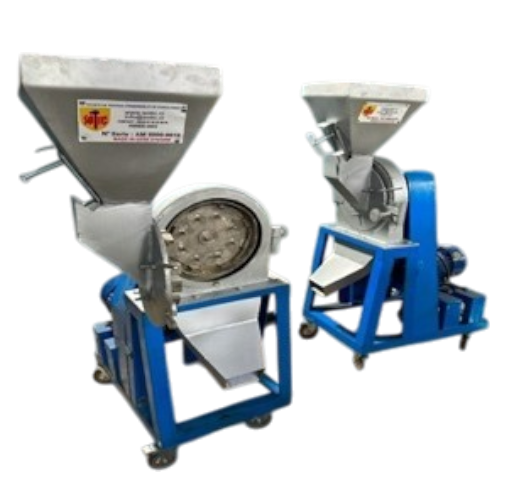
Fixed electric grater
Reduces the root to a fine pulp, as a fixed station with electric drive.
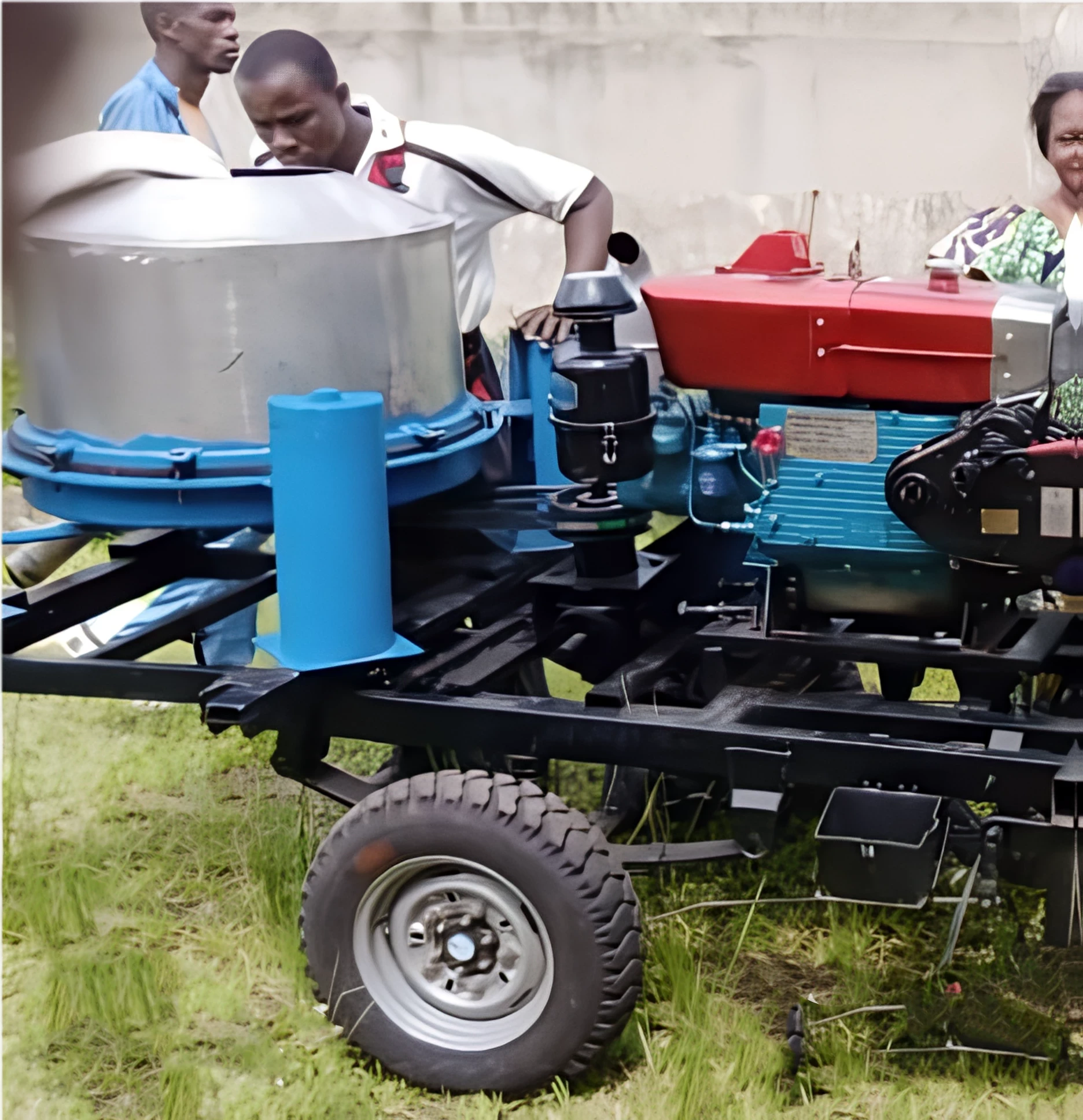
Mobile diesel centrifuge
Mechanical dewatering by centrifugal force, self-powered and movable from site to site.
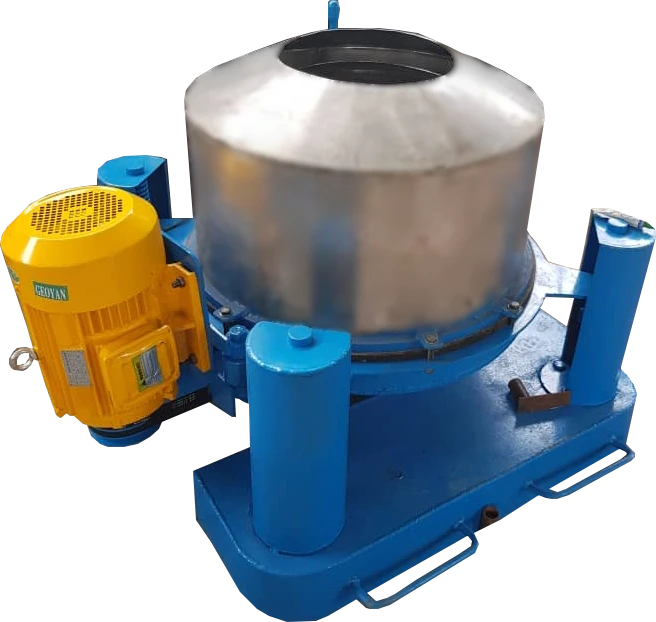
Fixed electric centrifuge
Centrifugal dewatering as a fixed station, for units with a stable electricity supply.
Semolina granulator
Granulates and grades cassava semolina for attiéké and placali.