Home › Our equipment › Cassava › Fixed electric grater
Fixed electric grater
Reduces the root to a fine pulp, as a fixed station with electric drive.
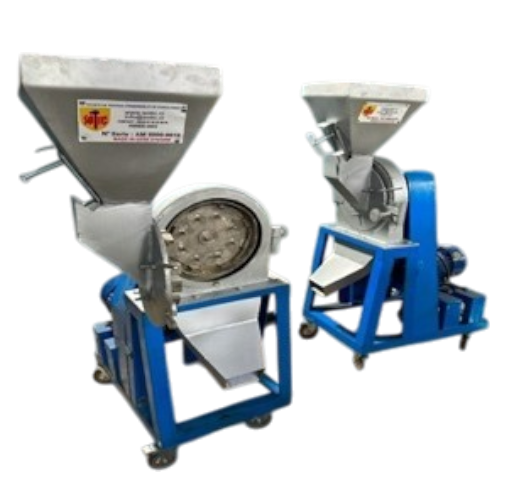
What this machine does
The fixed electric grater performs the operation that governs everything downstream on a cassava line: reducing the peeled root to a pulp whose fineness determines both the release of starch granules and the effectiveness of detoxification. Grating brings linamarin, held in the cell vacuoles, into contact with linamarase, located in the cytoplasm: it is this contact, caused by mechanical rupture of the cell walls, that starts the hydrolysis of the cyanogenic glucosides. A coarse pulp leaves cell fragments intact, therefore unhydrolysed cyanogenic compounds and trapped starch.
Performance is therefore not read from hourly throughput alone, but from the peripheral speed of the rotor and the condition of the grating plates. Below a sufficient peripheral speed the working member stops disintegrating and starts crushing: the pulp heats up, agglomerates, and the pressing that follows becomes far harder. Above it, specific consumption rises with no gain in fineness. The useful range is narrow and is verified machine by machine.
See the sector CassavaAt a glance
- ReferenceMAN-BEF
- SectorCassava
- PurposeReduces the root to a fine pulp, as a fixed station with electric drive.
A detailed PDF data sheet will be available in the document centre once produced.
The parts that do the work
Feed hopper
Chute at a calculated angle with an anti-return baffle, preventing any projection towards the operator and regulating the rotor feed rate.
Toothed drum rotor
Balanced drum fitted with interchangeable perforated plates: the height and density of the perforations set the resulting particle size.
Casing and discharge screen
Stainless steel enclosure with a calibrated screen: pulp is only discharged once it has passed the mesh, which makes the product uniform.
Electric drive
Three-phase motor and V-belt transmission, with accessible tensioner and a guarded transmission area.
Technical data and configurations
| Characteristic | Indicative value |
|---|---|
| Indicative throughput | 0.5 to 3 t/h of peeled roots |
| Installed power | 7.5 to 30 kW depending on size |
| Power supply | Three-phase 380 V — 50 Hz |
| Rotor peripheral speed | 20 to 35 m/s |
| Particle size obtained | mostly below 2 mm |
| Wear parts | interchangeable grating plates, belts |
| Product contact materials | AISI 304 stainless steel |
| Safety | interlocked cover cutting the drive when opened |
These are usual design ranges for this type of machine, intended to guide early thinking. The contractual characteristics of the equipment actually manufactured — throughputs measured at acceptance, absorbed power, real footprint and weight — are established by the SOTIC design office and stated in the technical offer.
Available configurations
- Several rotor sizes according to the hourly throughput required.
- Sets of grating plates with different perforations depending on the target product (gari, starch, flour).
- Frame with or without a collecting hopper under the screen.
Installation requirements
- Levelled concrete plinth, with chemical or mechanical anchoring according to the mass of the machine.
- Protected electrical supply sized on installed power, not on absorbed power.
- Sufficient side clearance to remove the casing and replace the grating plates.
- Water point nearby: cleaning at the end of the shift must be immediate, since dried pulp becomes strongly adherent.
Maintenance and safety at the workstation
A machine lasts as long as its maintenance does. The points below appear in the preventive maintenance plan handed over at acceptance and are covered during operator training.
Preventive maintenance
- Daily check of belt tension and absence of abnormal vibration.
- Inspection of the grating plates every shift: a blunt plate reduces fineness and raises consumption.
- Greasing of bearings at the intervals given in the maintenance plan handed over at acceptance.
- Periodic rotor balancing check after any part replacement.
Safety
- Never reach into the hopper while the motor is running, even when the rotor appears to have stopped: inertia is considerable.
- Electrical isolation is mandatory before opening any casing.
- Hearing protection is recommended in the immediate vicinity during operation.
Before ordering this machine
The fixed grater is intended for a unit with a stable electricity supply: it is quieter, cheaper to run and requires no engine maintenance. The mobile diesel model answers a different need — contract work across several villages, or the absence of a reliable grid. Operating cost per tonne is appreciably higher with diesel.
The working member is designed for a water-laden root. It accepts other fresh tubers of similar behaviour, but it is not suited to dry products, which call for a hammer mill and an entirely different specific energy. For each project we state the appropriate machine rather than stretching a machine's field of use.
Request a quote: Fixed electric grater
Tell us the throughput you are aiming for, the material to be processed and the energy available on your site: we come back with a reasoned configuration and a price, rather than a catalogue rate.
- Technical answer: we first check that this machine genuinely matches your need.
- Tailored configuration: size, drive, options and wear parts defined with you.
- Complete pricing: equipment, transport, erection, commissioning and training.
- Next steps: civil works, connections and maintenance where required.
First reply target: 48 working hours.
Other machines in the Cassava
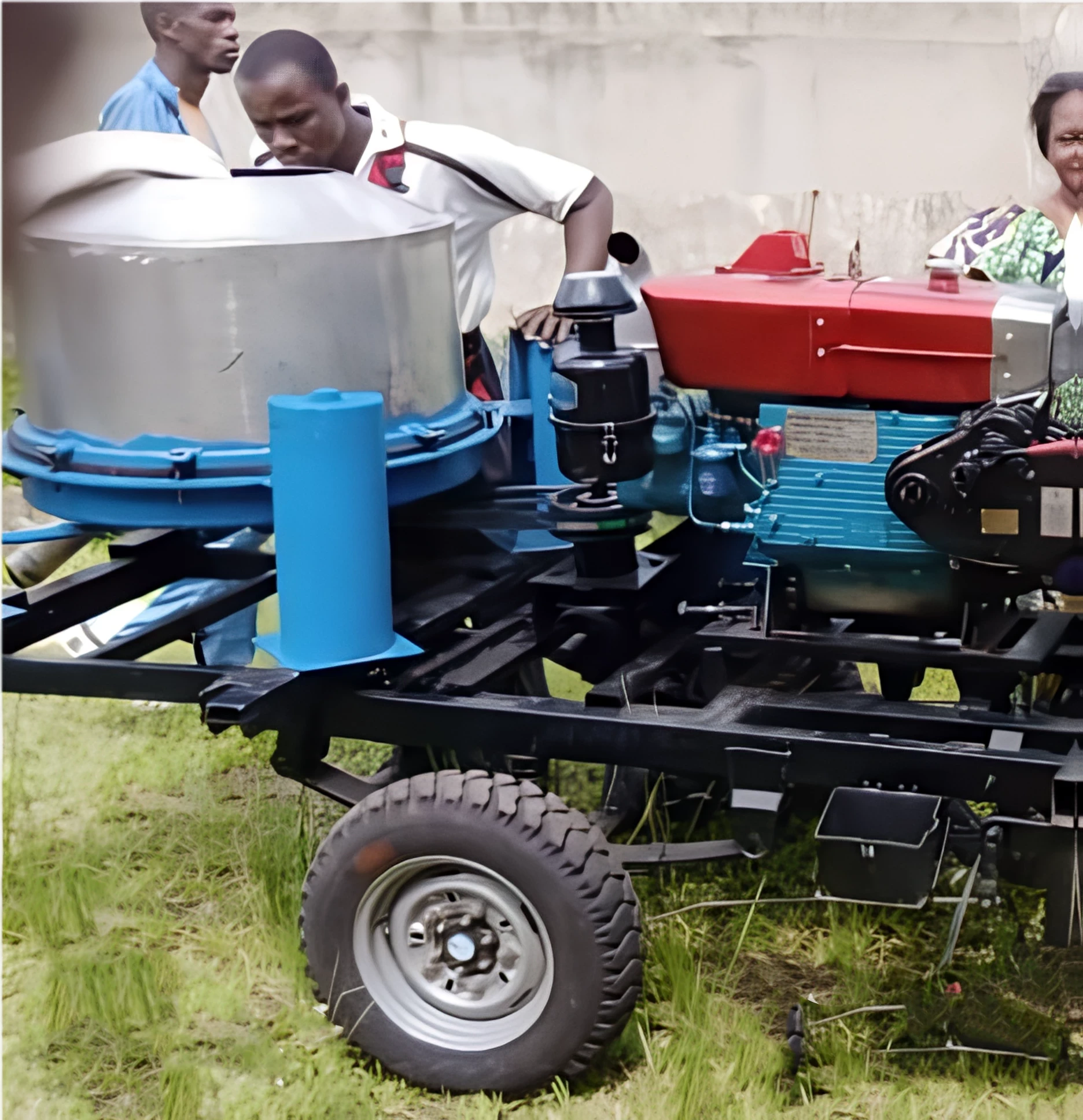
Mobile diesel centrifuge
Mechanical dewatering by centrifugal force, self-powered and movable from site to site.
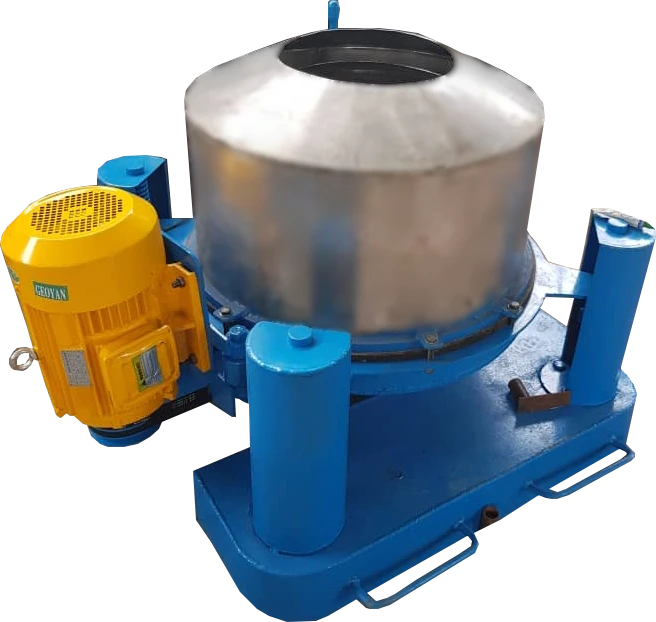
Fixed electric centrifuge
Centrifugal dewatering as a fixed station, for units with a stable electricity supply.

Semolina granulator
Granulates and grades cassava semolina for attiéké and placali.
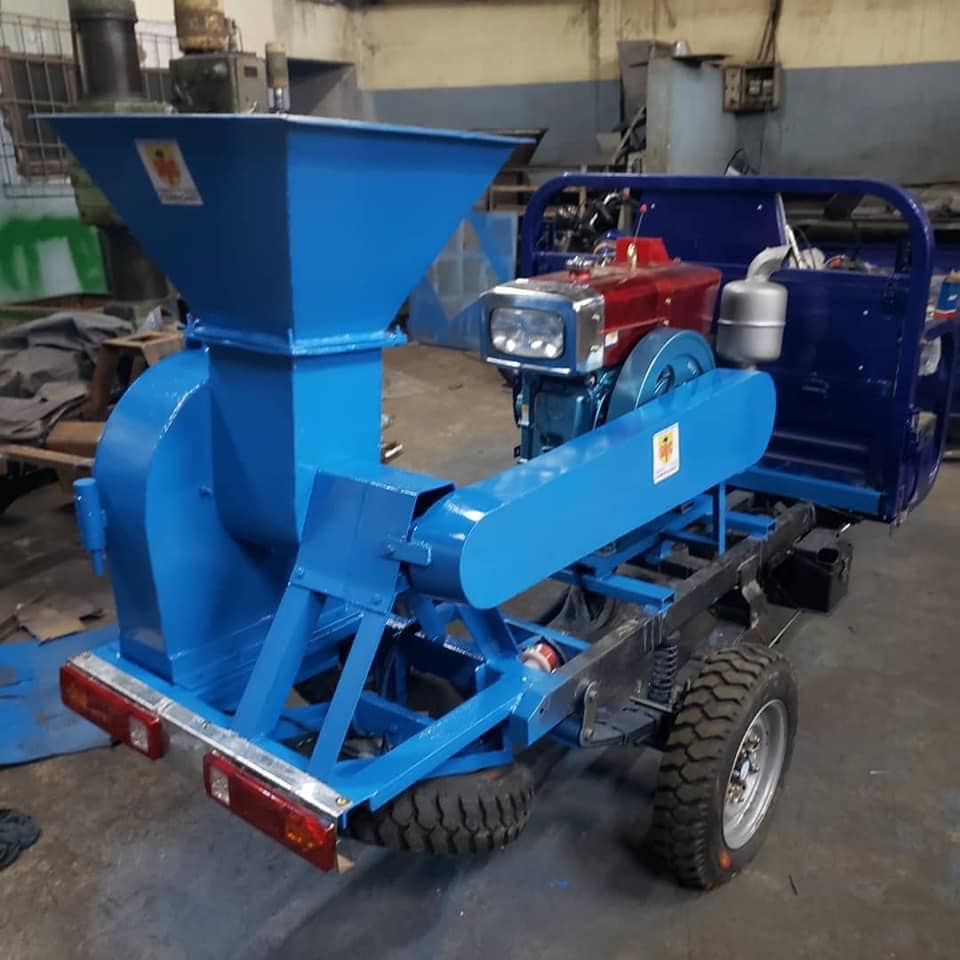
Mobile diesel grater
Self-contained grating unit on a towable chassis, to process the harvest close to the field.