Home › Our equipment › Cassava › Mobile diesel centrifuge
Mobile diesel centrifuge
Mechanical dewatering by centrifugal force, self-powered and movable from site to site.
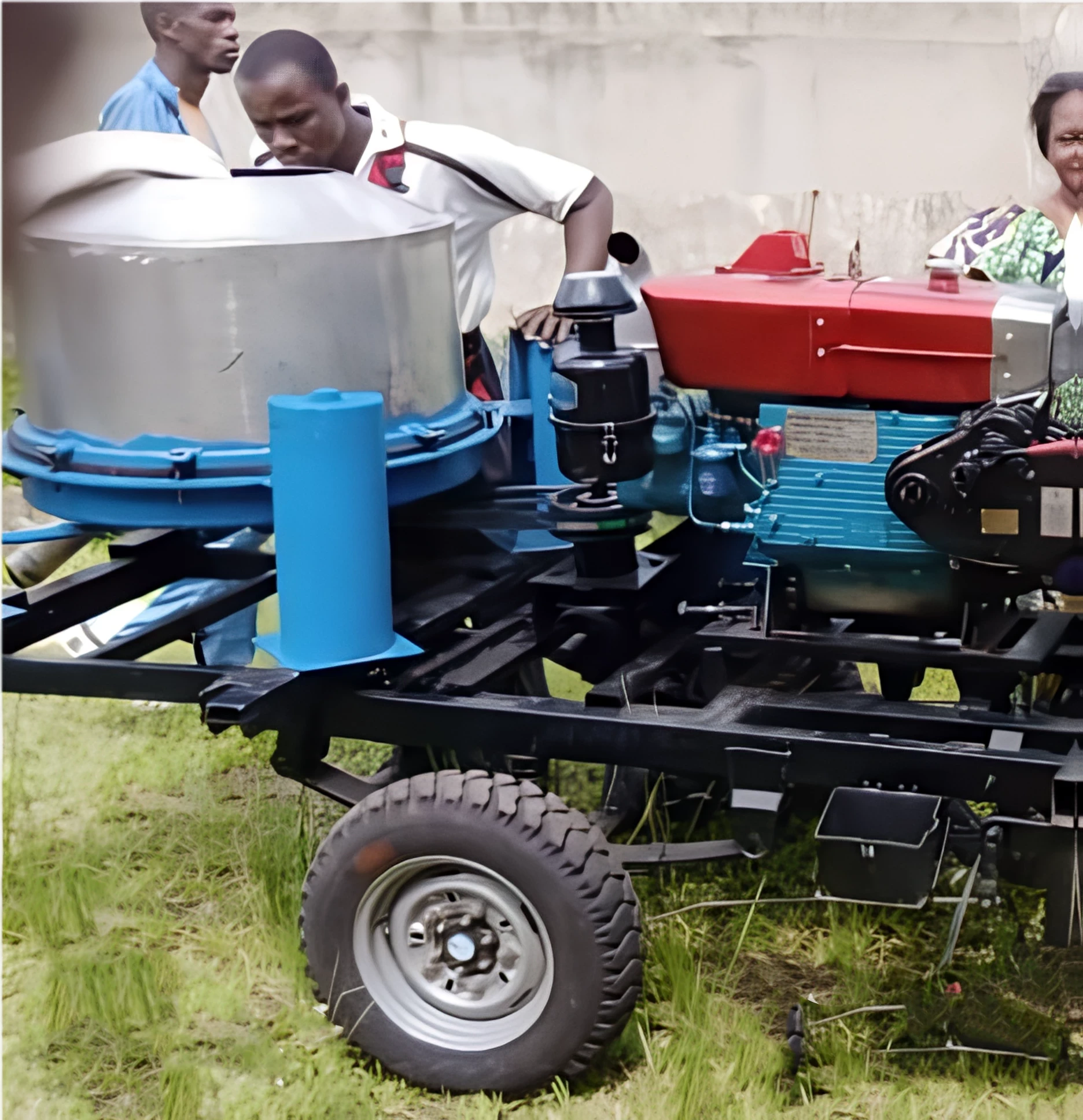
What this machine does
The centrifuge separates free water from the pulp in a centrifugal field, without applying the progressive compression a press would use. The pulp is loaded into a perforated basket spinning at high speed; the centrifugal acceleration, which can reach several hundred times gravity, expels interstitial water through the perforated wall while the solid phase stays pressed against the basket. The operation is fast — a few minutes instead of several tens for a batch press — and does not blind the surface of the cake.
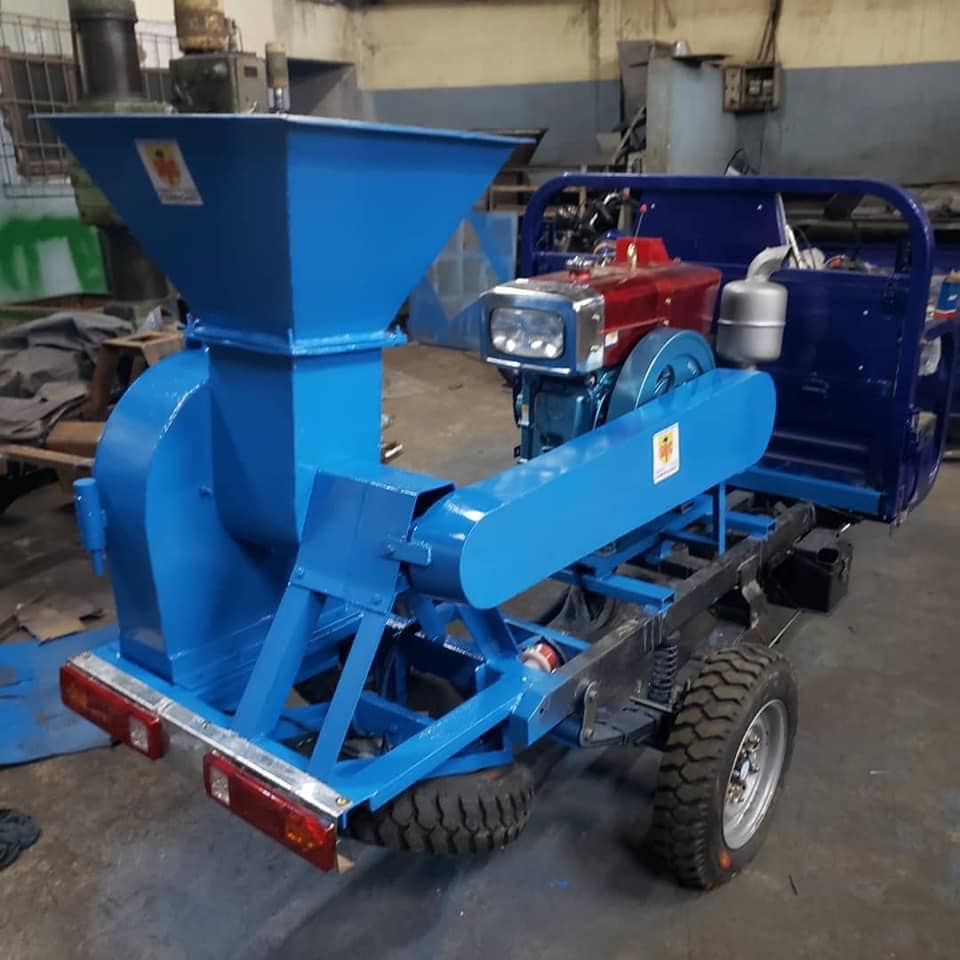
Mounted on a road chassis and driven by a diesel engine, this centrifuge is designed for contract work: it travels to the material instead of requiring the material to travel to it. This answers the perishability of cassava directly, its processing window being counted in tens of hours: treating on site avoids transporting roots of which sixty to seventy per cent of the mass is water destined to be removed.
See the sector CassavaAt a glance
- ReferenceMAN-EMD
- SectorCassava
- PurposeMechanical dewatering by centrifugal force, self-powered and movable from site to site.
A detailed PDF data sheet will be available in the document centre once produced.
The parts that do the work
Perforated basket
Stainless steel drum with calibrated perforations, mounted on a vertical shaft with suspension absorbing loading imbalance.
Loading in bags or loose
The pulp is spread by hand in an even layer: an unbalanced load creates a vibration that prematurely wears the bearings.
Juice collection
Receiving tank and chute directing press water to a settling tank or to starch recovery.
Diesel drive
Single-cylinder engine with manual or electric start, belt transmission, on a towable chassis suited to farm tracks.
Technical data and configurations
| Characteristic | Indicative value |
|---|---|
| Batch capacity | 60 to 250 kg of pulp depending on model |
| Cycle time | 5 to 15 min |
| Moisture at outlet | 48 to 55 % wet basis (indicative) |
| Drive | diesel, 8 to 20 hp |
| Basket | perforated AISI 304 stainless steel |
| Mobility | two-wheel chassis, tractor or pick-up hitch |
| Fuel consumption | depends on speed and load |
| Safety | interlocked lid, rotation brake |
These are usual design ranges for this type of machine, intended to guide early thinking. The contractual characteristics of the equipment actually manufactured — throughputs measured at acceptance, absorbed power, real footprint and weight — are established by the SOTIC design office and stated in the technical offer.
Available configurations
- Several basket diameters according to the batch load required.
- Electric-start version for easier operation.
- Optional recovery equipment for starch-bearing water.
Installation requirements
- Park on flat, stabilised ground: a sloping stance amplifies vibration and loads the bearings.
- Wheel chocks and stands deployed before starting rotation.
- Organised juice drainage to a tank: press water is acidic and heavily loaded.
- Working area clear for at least one metre around the machine.
Maintenance and safety at the workstation
A machine lasts as long as its maintenance does. The points below appear in the preventive maintenance plan handed over at acceptance and are covered during operator training.
Preventive maintenance
- Engine servicing to the manufacturer's schedule: filtration, oil, decoking — the diesel is the most sensitive element here.
- Check basket condition and shaft tightening every campaign.
- Inspect suspension mounts: fatigue transmits vibration to the chassis.
- Full rinsing after each working day, cassava juice being corrosive as it dries.
Safety
- Never open the lid before the basket has come to a complete stop.
- Balanced loading is imperative: a serious imbalance can tear the rotating assembly loose.
- Keep all ignition sources away when refuelling.
Before ordering this machine
The centrifuge is faster and does not blind, but it consumes energy throughout the cycle and usually leaves a slightly higher residual moisture than a well-conducted slow pressing. The press is slower, reaches higher dry-matter content and needs no permanent drive. The choice depends on the product: for attiéké and semolina, where throughput matters, the centrifuge often wins; for starch and flour, where downstream drying is expensive, every point of moisture removed by pressing pays for itself.
It is when production is scattered across several villages or plots and no single site concentrates enough tonnage. The equipment then becomes a service tool whose per-tonne charge can cover its amortisation. That calculation must be made before purchase, allowing for travel time, which is not production time.
Request a quote: Mobile diesel centrifuge
Tell us the throughput you are aiming for, the material to be processed and the energy available on your site: we come back with a reasoned configuration and a price, rather than a catalogue rate.
- Technical answer: we first check that this machine genuinely matches your need.
- Tailored configuration: size, drive, options and wear parts defined with you.
- Complete pricing: equipment, transport, erection, commissioning and training.
- Next steps: civil works, connections and maintenance where required.
First reply target: 48 working hours.
Other machines in the Cassava
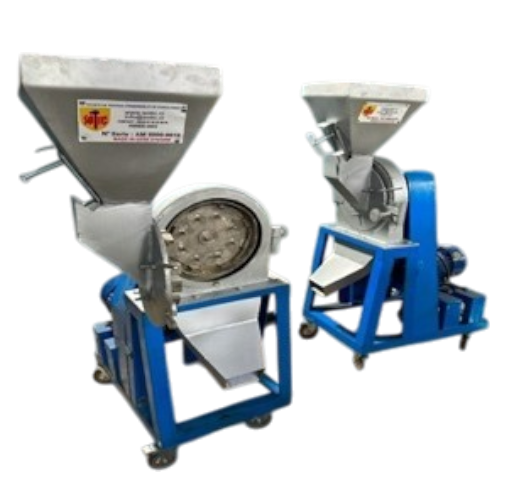
Fixed electric grater
Reduces the root to a fine pulp, as a fixed station with electric drive.
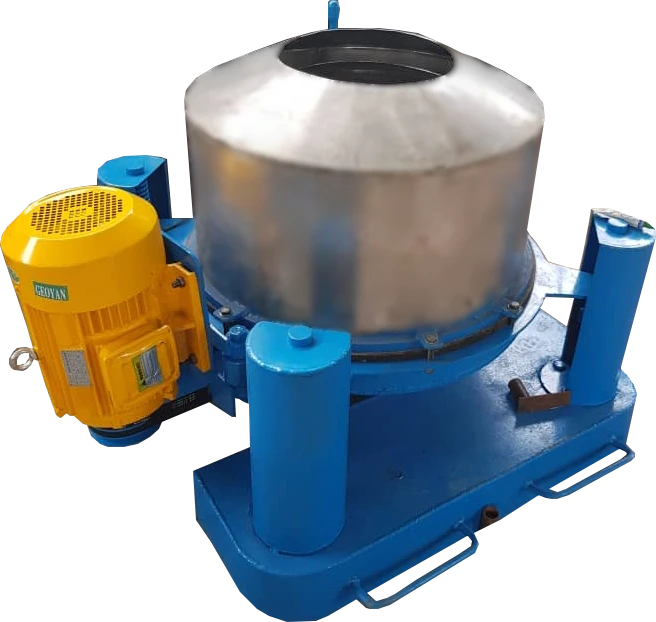
Fixed electric centrifuge
Centrifugal dewatering as a fixed station, for units with a stable electricity supply.
Semolina granulator
Granulates and grades cassava semolina for attiéké and placali.
Mobile diesel grater
Self-contained grating unit on a towable chassis, to process the harvest close to the field.