Home › Our equipment › Cassava › Semolina granulator
Semolina granulator
Granulates and grades cassava semolina for attiéké and placali.

What this machine does
The granulator turns the compacted press cake into regular granules, a decisive operation for attiéké quality. Grain regularity governs two distinct phenomena: uniform steam penetration during cooking, and the mouthfeel of the finished product. An uneven grain cooks unevenly — overcooked on the surface, raw at the core of the lumps — and yields an attiéké that is both sticky and gritty, immediately devalued on the market.
Technically, the operation combines gentle mechanical break-up with particle size classification. The difficulty lies in the nature of the material: press cake is plastic and sticky, and tends to agglomerate rather than divide. This is why the speed of the working members, the type of screen and the recycling rate of the oversize are settings to be adjusted to the moisture of the day's pulp, not parameters fixed once and for all.
See the sector CassavaAt a glance
- ReferenceMAN-SEM
- SectorCassava
- PurposeGranulates and grades cassava semolina for attiéké and placali.
A detailed PDF data sheet will be available in the document centre once produced.
The parts that do the work
Break-up chamber
Beaters or paddles fragmenting the press cake without crushing it, which would produce paste instead of granules.
Grading screen
Interchangeable screens setting the grain class obtained, from fine semolina to the coarser grain of placali.
Oversize recycling
Automatic return of non-conforming lumps to the chamber, with no manual handling and no loss of material.
Graded outlet
Chute feeding the cooking or fermentation station in a continuous flow.
Technical data and configurations
| Characteristic | Indicative value |
|---|---|
| Indicative throughput | 0.3 to 2 t/h |
| Installed power | 2.2 to 7.5 kW |
| Power supply | Three-phase 380 V — 50 Hz |
| Screen aperture | 0.5 to 1.5 mm, interchangeable |
| Oversize recycled | 5 to 15 % depending on moisture |
| Product contact materials | AISI 304 stainless steel |
| Cleaning | quick access to screens without special tools |
| Footprint | depending on model, on a frame with adjustable feet |
These are usual design ranges for this type of machine, intended to guide early thinking. The contractual characteristics of the equipment actually manufactured — throughputs measured at acceptance, absorbed power, real footprint and weight — are established by the SOTIC design office and stated in the technical offer.
Available configurations
- Additional screen sets according to the products manufactured.
- Version with a high receiving hopper for elevator feeding.
- Wheeled frame for workshops with an evolving layout.
Installation requirements
- Flat, washable floor sloping to a drain: the station produces fines that must be rinsed away.
- Outlet height matched to the downstream station, to avoid any intermediate manual handling.
- Sufficient lighting above the station for visual checking of the grain.
- Protected electrical supply accessible from the operating position.
Maintenance and safety at the workstation
A machine lasts as long as its maintenance does. The points below appear in the preventive maintenance plan handed over at acceptance and are covered during operator training.
Preventive maintenance
- Check screen condition at every start-up: a distorted mesh downgrades the whole production run.
- Full cleaning at the end of the shift, with screens removed.
- Check beater wear and replace as a complete set.
- Check fastener tightness, the station being under constant vibration.
Safety
- Hopper protected by a grille preventing hands from entering.
- Isolation before removing screens.
- A dust mask is recommended when dry fines are produced.
Before ordering this machine
It mechanises it but does not replace it entirely: judging the grain, assessing pulp moisture and adjusting the settings remain operator skills. What the machine brings is regularity and capacity — two things a manual workshop can no longer deliver beyond a few hundred kilogrammes a day without quality drifting.
It depends on the product and the market. Fine semolina for attiéké, a coarser grain for placali, an intermediate size for certain regional uses. The machine is delivered with the screen set matching the declared products, and further sets can be bought later without modifying the machine.
Request a quote: Semolina granulator
Tell us the throughput you are aiming for, the material to be processed and the energy available on your site: we come back with a reasoned configuration and a price, rather than a catalogue rate.
- Technical answer: we first check that this machine genuinely matches your need.
- Tailored configuration: size, drive, options and wear parts defined with you.
- Complete pricing: equipment, transport, erection, commissioning and training.
- Next steps: civil works, connections and maintenance where required.
First reply target: 48 working hours.
Other machines in the Cassava
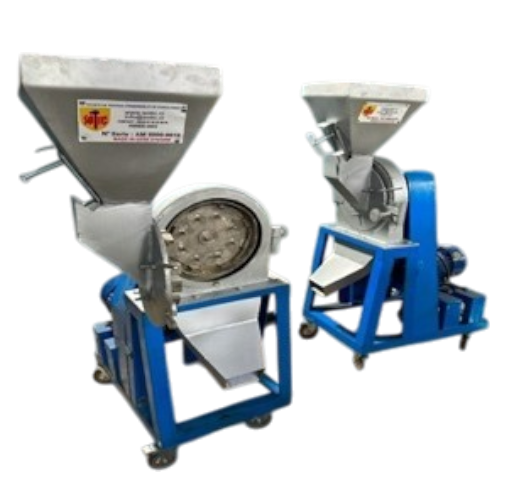
Fixed electric grater
Reduces the root to a fine pulp, as a fixed station with electric drive.
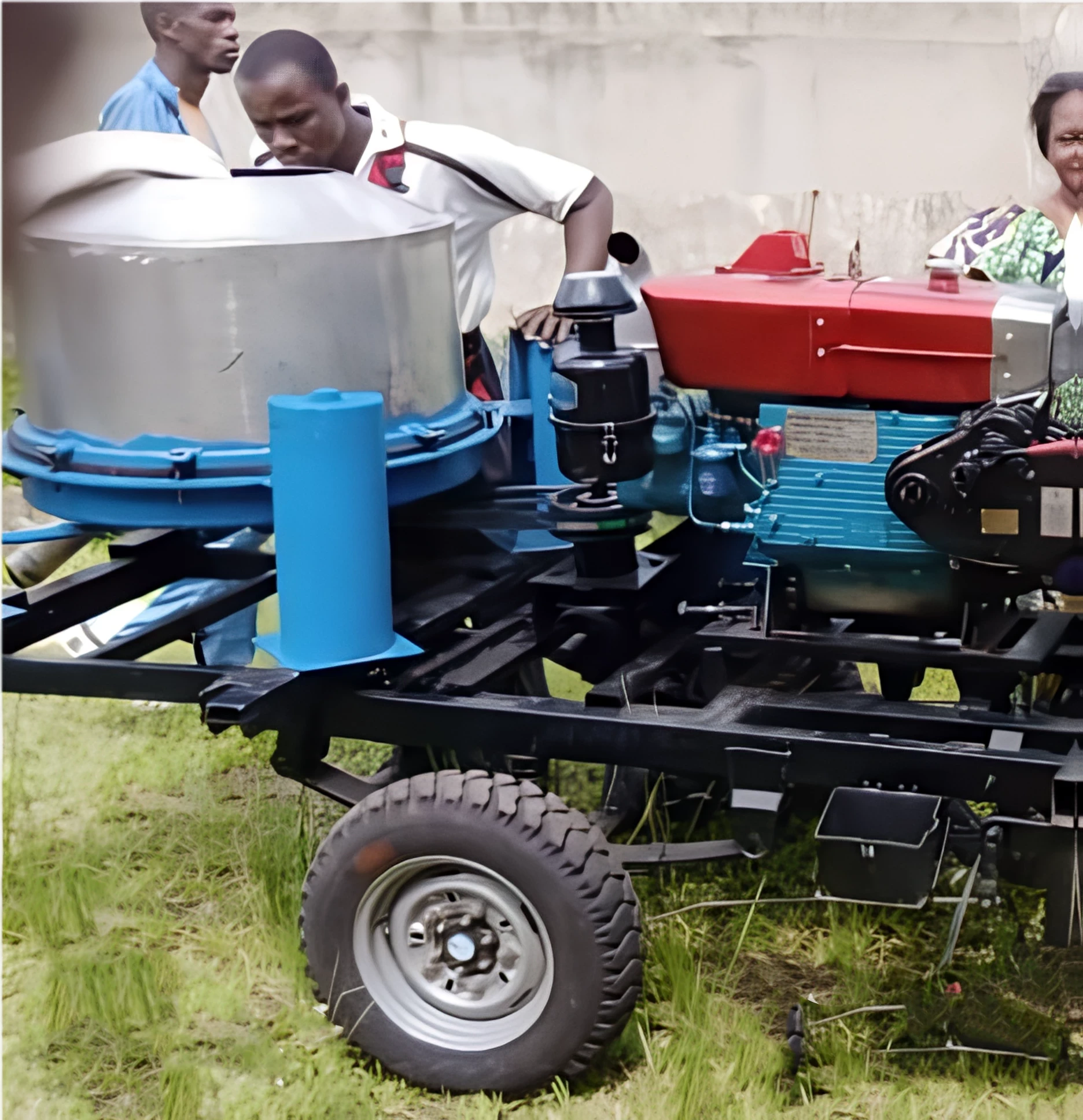
Mobile diesel centrifuge
Mechanical dewatering by centrifugal force, self-powered and movable from site to site.
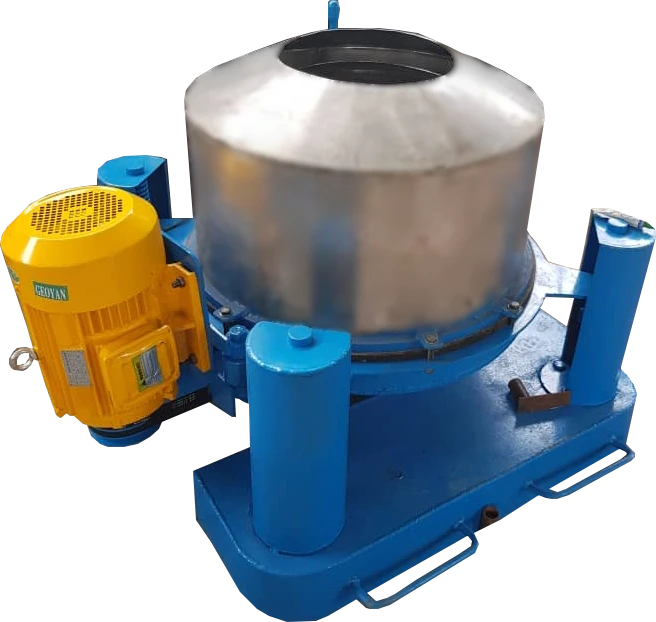
Fixed electric centrifuge
Centrifugal dewatering as a fixed station, for units with a stable electricity supply.
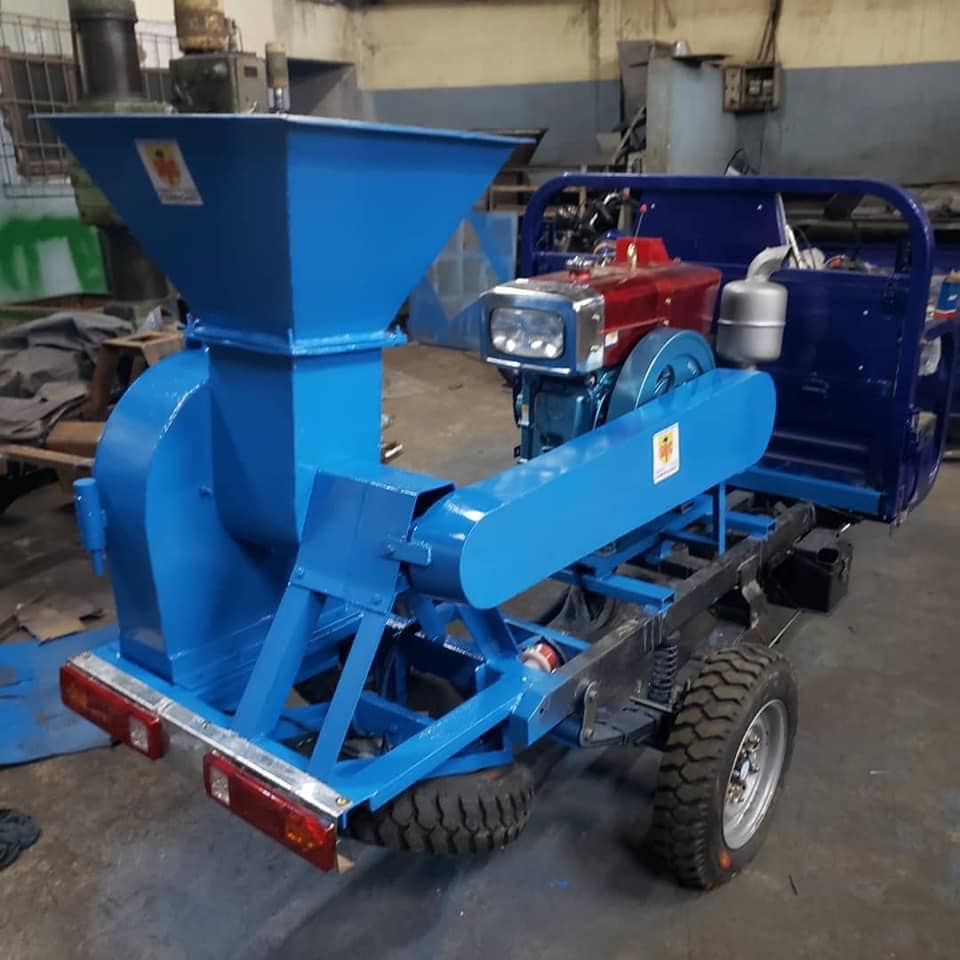
Mobile diesel grater
Self-contained grating unit on a towable chassis, to process the harvest close to the field.