Home › Our equipment › Farm mechanisation
Working more land without degrading the soil
Mechanisation is not simply buying a tractor. It is the match between available power, the implement hitched, the soil type and the cropping calendar. Badly matched, it compacts the horizons, accelerates erosion and costs more than it earns.
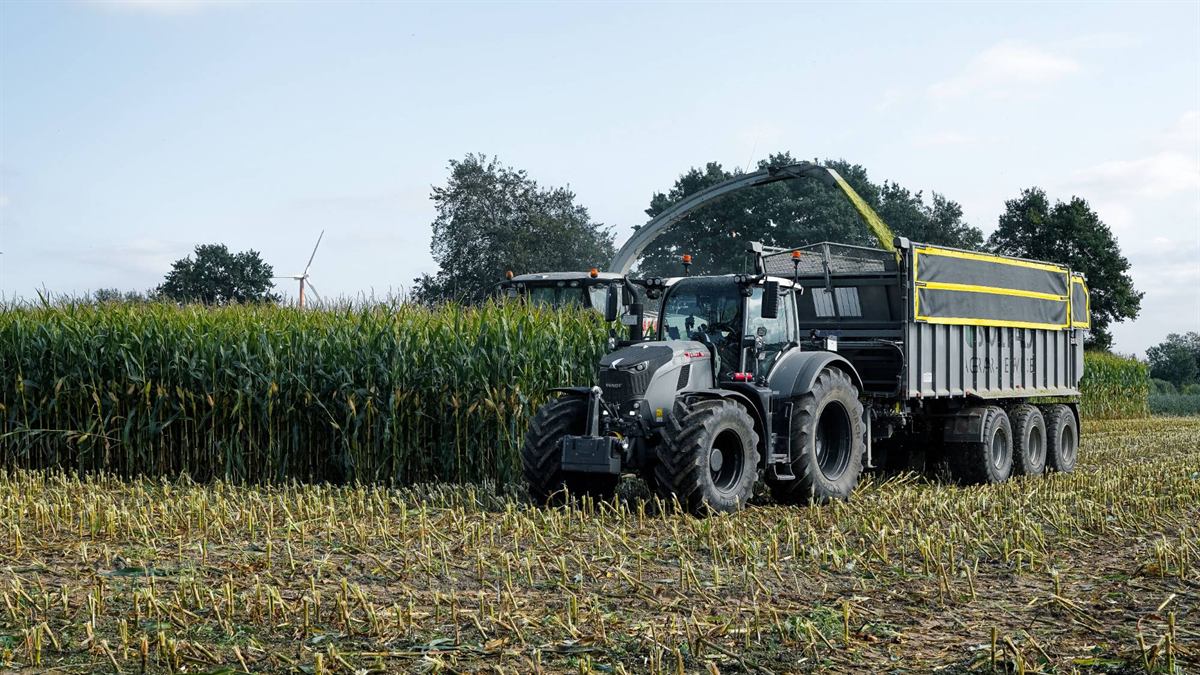
Power is useless if it does not reach the ground
A tractor transmits to the ground only a fraction of its engine power. Between rated power and the drawbar pull actually available, transmission losses and above all wheel slip absorb a considerable share of the energy. On dry, cohesive soil, ten to fifteen per cent slip corresponds to normal operation; beyond that, energy is spent digging ruts rather than pulling the implement.
The levers are well known and rarely applied: ballasting matched to the effort demanded, inflation pressure adjusted to the load rather than left at road value, tyre width matched to the bearing capacity of the soil, and above all implement width matched to available power. An implement too wide for a tractor too weak works correctly neither in depth nor in speed.
The specific constraint of tropical ferrallitic soils adds an agronomic dimension. These soils, rich in iron and aluminium oxides, are sensitive to compaction and erosion as soon as the surface structure is destroyed. Repeated work at the same depth creates a plough pan that restricts rooting and infiltration. Alternating depths, preferring shallow work where it suffices, and working at the right soil moisture are matters of practice as much as of equipment.
Acceptable slip
Of the order of 10 to 15 % on load-bearing soil; beyond that, useful pull falls sharply.
Inflation pressure
Matched to axle load and type of work; road pressure in the field degrades both traction and soil.
Plough pan
Caused by repeated work at constant depth; corrected by alternating depths and by subsoiling.
Field capacity
A function of working width, forward speed and headland turning efficiency.
General machinery reference points; actual settings are established plot by plot according to soil, moisture and crop.
The cropping sequence, station by station
Each mechanised field operation is characterised by an agronomic objective, a working depth and a field capacity. It is from those three figures that the machinery fleet is sized.
Land clearing and initial preparation
Stump removal, windrowing and levelling of plots being brought into cultivation, preserving as far as possible the surface horizon, the seat of fertility.
Operating parameters
- Machines according to the scale of work
- Precaution preserve the humic horizon
- Windrows aligned with the slope
Deep tillage
Ploughing with a disc or mouldboard plough, or loosening with a subsoiler where the objective is to break a pan without inverting the profile.
Operating parameters
- Depth 20 to 35 cm by implement
- Speed 5 to 8 km/h
- Power to match the width
Secondary tillage and seedbed preparation
Disc harrowing or shallow work to break clods and level, limiting the number of passes to preserve soil structure.
Operating parameters
- Depth 8 to 15 cm
- Speed 7 to 10 km/h
- Passes to be minimised
Sowing and planting
Mechanical sowing with control of seed rate, depth and row spacing — the first conditions of an even plant stand.
Operating parameters
- Depth by species
- Seed rate adjustable
- Row spacing matched to the system
Crop maintenance
Flail mowing, mechanical weeding, plant protection spraying with suitable nozzles and control of the spray volume applied per hectare.
Operating parameters
- Working width by implement
- Volume/ha controlled by calibration
- Speed steady
Harvest and transport
Harvesting equipment according to the crop, trailers and tipping bodies sized for farm tracks, to shorten the delay between harvest and processing.
Operating parameters
- Payload by trailer
- Tracks bearing capacity to check
- Objective reduce post-harvest delay
The ranges given are orders of magnitude for design drawn from process practice; they are adjusted for each installation once the raw material actually processed has been characterised.
2 machines in the catalogue
Each machine has its own detailed sheet: role in the process chain, operating principle, indicative specifications, installation requirements, maintenance and a direct quotation request.
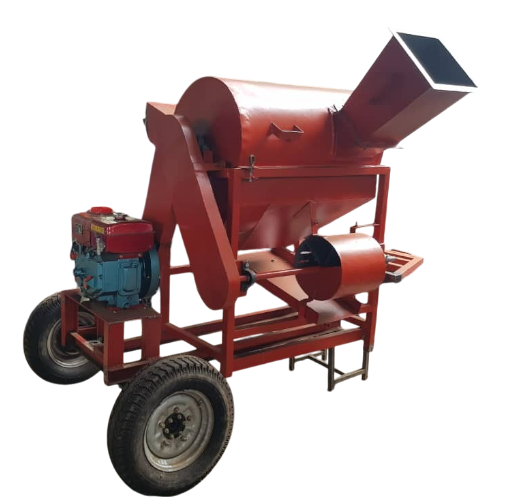

Equipment supplied and adaptations
SOTIC supplies the equipment, adapts it to local conditions where necessary — reinforcements, guards, hitches — and maintains it. Local availability of wear parts is a selection criterion in its own right.
Agricultural tractors
Tractors across a range of ratings, with three-point linkage, standard power take-off and ballasting options, selected for the availability of their parts and after-sales service.
- Power 40 to 120 hp
- Linkage 3-point cat. I / II
- Power take-off 540 rpm
- Transmission 2 or 4-wheel drive
Power tillers and compact tractors
Equipment suited to small areas, fragmented plots and market gardening, with interchangeable implements and low ground pressure.
- Power 8 to 20 hp
- Implements rotary tiller, plough, trailer
- Use small plots, market gardening
- Servicing simple and documented
Disc plough
Concave discs on a reinforced frame, particularly suited to hard, stony soils or those rich in root debris where a mouldboard plough is exposed.
- Number of discs 2 to 4
- Depth 20 to 30 cm
- Power required ≈ 20 to 30 hp per disc
- Settings angle and levelling
Disc harrow
X or offset secondary tillage implement with notched or plain discs, the angle of attack setting the intensity of the work.
- Width 1.5 to 4 m
- Depth 8 to 15 cm
- Adjustment angle of attack
- Bearings protected against dust
Subsoiler
Robust tines designed to break plough pans and restore deep infiltration, without inverting the cultivated profile.
- Number of tines 1 to 3
- Depth 35 to 50 cm
- Power high per tine
- Safety shear bolt
Seed drill
Mechanical or pneumatic metering seed drill, with seed rate, depth and spacing adjustment and a hectare counter.
- Rows by model
- Settings rate and depth
- Hopper capacity by width
- Control calibration before the season
Flail mower
Shredding of crop residues and maintenance of fallow and inter-rows, with guarded transmission and replaceable cutting blades.
- Width 1.2 to 2.5 m
- Drive power take-off
- Blades replaceable
- Protection chains or skirts
Trailers and tipping bodies
Single or tandem axle farm trailers, reinforced chassis for poor tracks, tipping body and braking matched to the load.
- Payload 2 to 10 t
- Tipping hydraulic
- Chassis reinforced
- Braking by load and gradient
Irrigation and pumping equipment
Motor pump sets, sprinkler or drip networks, filtration and pressure control, sized on the crop's water requirement.
- Flow by irrigated area
- Energy thermal, electric or solar
- Filtration mandatory for drip
- Regulation controlled pressure
The stations described above complement the catalogue machines: they are studied, adapted or manufactured on request according to the configuration of your line. The values shown are usual design ranges for this type of equipment; contractual characteristics are established project by project by the SOTIC design office and are not a commitment at this stage.
Mechanisation that stays profitable over time
The real cost of a mechanised operation is calculated per hectare, including fuel, servicing and amortisation. Four factors determine that cost far more than the purchase price of the machine.
Power-implement match
An implement too wide for the available power forces a reduction in speed or depth: field capacity collapses and consumption per hectare rises. The match is calculated, not improvised.
Preventive servicing
Filtration, levels, belt tension, greasing, play checks: most costly downtime results from deferred servicing, not from a design fault.
Parts availability
A wear part unobtainable in the country immobilises the machine in mid-season. We favour equipment whose common components are referenced and distributed locally.
Operator skill
Setting a plough, calibrating a sprayer, reading wheel slip: these skills are taught. They make a measurable difference to fuel use and to the state of the soil.
The machine alone is not enough
Every mechanisation project is treated as a whole: study, manufacturing, host building, commissioning, training and maintenance.
Sizing
Material and energy balance, process selection, target throughput, investment estimate and operating cost per tonne.
WORKSCivil engineering
Anchor blocks, slabs, effluent drainage, ventilation, separation of clean and dirty areas, electrical supply.
TRAININGLine operation
Operator training in settings, in-process quality checks and emergency stop procedures.
SERVICEMaintenance
Preventive maintenance plan, set of wear parts, corrective work and locally sourced spares.
mechanisation: what to check before investing
The answer rests on the number of hectares worked per year. Below a certain threshold, fixed costs — amortisation, insurance, downtime, driver training — are poorly absorbed and contracting is cheaper, provided it is available at the agronomically right moment, which is precisely the difficulty at peak season. Above the threshold, or where control of the calendar becomes strategic, buying is justified. We build that calculation from your actual cropping plan rather than from a general rule.
Four rules, in order of effectiveness: work at the right soil moisture — one pass in wet conditions destroys structure more surely than ten passes on a drained soil; limit the number of passes by combining implements; adjust inflation pressure to the real load rather than running at road pressure; alternate working depths from season to season to prevent a pan forming. Occasional subsoiling can correct an established pan, but it costs more energy than prevention.
Yes, that is a significant part of our workshop activity. Chassis reinforcement for poor tracks, transmission guards against abrasive dust, adaptation of hitches between equipment of different origins, manufacture of replacement wear parts when the original supply is too slow. These adaptations are the subject of a study: modifying equipment without checking the consequences for its mechanical integrity and for the safety of its operator would be irresponsible.
Let us size your fleet on your cropping plan
Areas to be worked, crops, soil types, calendar of operations and equipment already on hand: these elements allow us to propose a coherent tractor-implement combination and a forecast cost per hectare.