Home › Our equipment › Cereals & Fruit › Cereal mill
Cereal mill
Fine grinding of cereals in stainless steel, for flour intended for human consumption.

What this machine does
This mill is dedicated to grinding cereals for human consumption: maize, millet, sorghum, rice, wheat. Its stainless steel product-contact construction and its quick dismantling meet the hygiene requirements of food production, where a general-purpose workshop mill would not do.
The quality of a flour is judged by the regularity of its particle size and by its outlet temperature. Over-energetic grinding heats the flour, which degrades certain constituents and shortens shelf life by accelerating rancidity of the germ lipids. The setting therefore seeks the best compromise between fineness, throughput and heating — three linked quantities that cannot be optimised separately.
See the sector Cereals & FruitAt a glance
- ReferenceCER-BCE
- SectorCereals & Fruit
- PurposeFine grinding of cereals in stainless steel, for flour intended for human consumption.
A detailed PDF data sheet will be available in the document centre once produced.
The parts that do the work
Stainless grinding members
Discs or hammers in materials compatible with food contact.
Grading screen
Mesh determining flour fineness, interchangeable by product.
Fines extraction
Capture limiting dust and recovering product that would otherwise be lost.
Quick dismantling
Access to the working parts without special tooling, for full cleaning between cereals.
Technical data and configurations
| Characteristic | Indicative value |
|---|---|
| Indicative throughput | 100 kg/h to 1.5 t/h depending on fineness |
| Installed power | 5.5 to 22 kW |
| Screens | interchangeable by target particle size |
| Product contact materials | AISI 304 stainless steel |
| Extraction | cyclone recommended |
| Flour temperature | to be monitored; excessive heating degrades the product |
| Power supply | Three-phase 380 V — 50 Hz |
| Cleaning | quick dismantling of the working parts |
These are usual design ranges for this type of machine, intended to guide early thinking. The contractual characteristics of the equipment actually manufactured — throughputs measured at acceptance, absorbed power, real footprint and weight — are established by the SOTIC design office and stated in the technical offer.
Available configurations
- Screen sets according to the flours produced.
- Version with direct bagging at the outlet.
- Capacities matched to the unit's daily output.
Installation requirements
- Room dedicated to dry products, separate from the wet areas of the workshop.
- Extraction connected to a cyclone, preferably outside.
- Rigid anchored slab with clearance for cleaning beneath the machine.
- Protected, properly sized electrical supply.
Maintenance and safety at the workstation
A machine lasts as long as its maintenance does. The points below appear in the preventive maintenance plan handed over at acceptance and are covered during operator training.
Preventive maintenance
- Full cleaning between cereals: unintended mixing raises commercial and allergen issues.
- Check wear of the grinding members and of the screen.
- Monitor flour temperature at the outlet, an indicator of wear or overload.
- Clean the cyclone and check the extraction.
Safety
- Flour dust is combustible: keep extraction running and eliminate ignition sources.
- Isolation before opening the chamber.
- Wear a mask when cleaning and emptying the cyclone.
Before ordering this machine
Yes, provided there is full cleaning between each product and the production order is organised to limit carry-over. The allergen question must be addressed explicitly: if gluten-containing and gluten-free products are milled on the same machine, a simple purge does not guarantee the absence of traces.
By limiting three factors: moisture — the cereal must be dry before milling and the flour stored sheltered —, temperature — less heating in grinding and cool storage slow rancidity — and contact with air. The shelf life of a wholemeal flour is structurally shorter than that of a flour whose germ has been separated, because of the lipids it contains.
Request a quote: Cereal mill
Tell us the throughput you are aiming for, the material to be processed and the energy available on your site: we come back with a reasoned configuration and a price, rather than a catalogue rate.
- Technical answer: we first check that this machine genuinely matches your need.
- Tailored configuration: size, drive, options and wear parts defined with you.
- Complete pricing: equipment, transport, erection, commissioning and training.
- Next steps: civil works, connections and maintenance where required.
First reply target: 48 working hours.
Other machines in the Cereals & Fruit
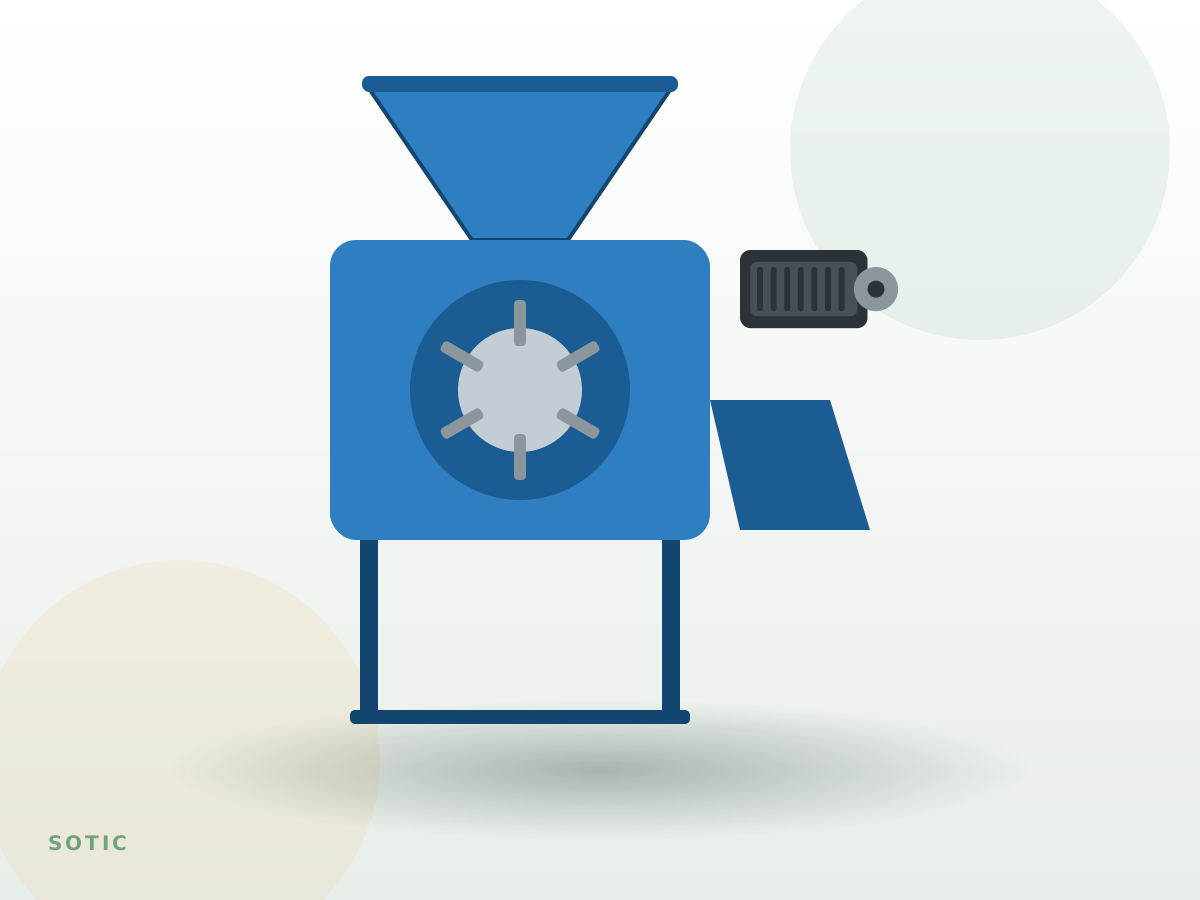
Dry hammer mill
Grinds dry products by impact, with particle size set by the screen fitted.

Wet paste mill
Wet grinding of pasty products, with an inclined feed chute.

Parabolic solar dryer
Solar dryer with parabolic reflector: concentrated radiation, no energy consumption.
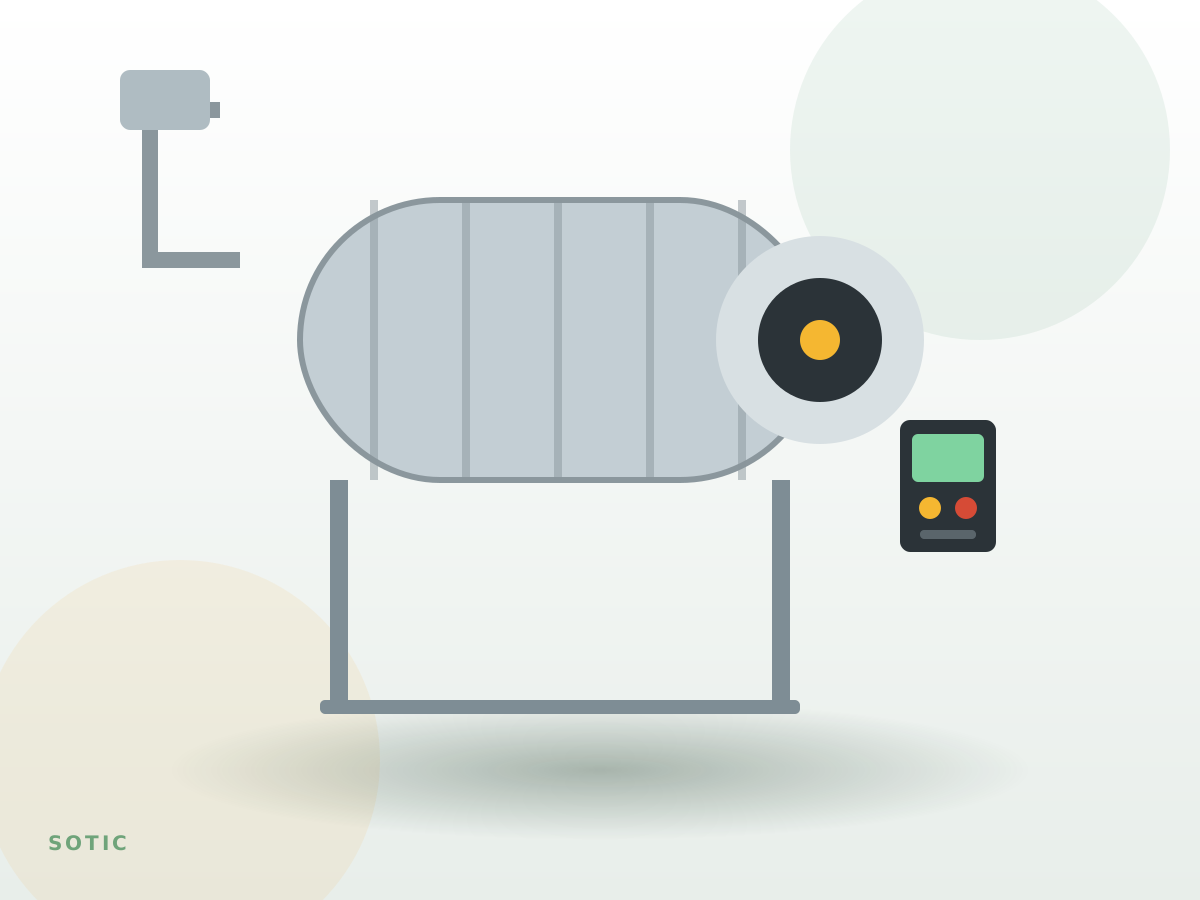
Gas roaster
Rotating drum roasting with flame control and a mastered treatment curve.