Home › Our equipment › Cashew › Cashew peeling machine
Cashew peeling machine
Removes the testa by gentle abrasion, balancing residual skin against breakage.

What this machine does
After shelling, the kernel is still wrapped in a brown testa that must be removed for white-kernel markets. The operation rests on thermal preparation: drying in an oven contracts the testa and breaks its adhesion to the kernel. The peeling machine then exploits that embrittlement through gentle abrasion, combined with extraction that removes the detached skins as they come away.
The whole adjustment consists in balancing two opposite defects. Abrasion that is too energetic removes all the testa but breaks kernels, lowering the whole-kernel rate and therefore the batch price. Abrasion that is too gentle preserves the kernels but leaves residual skin, which also downgrades the batch. The balance point depends on the degree of prior drying: it is therefore upstream, at the oven, that most of the peeling performance is won.
See the sector CashewAt a glance
- ReferenceCAJ-DEP
- SectorCashew
- PurposeRemoves the testa by gentle abrasion, balancing residual skin against breakage.
A detailed PDF data sheet will be available in the document centre once produced.
The parts that do the work
Abrasive drum or rollers
Gentle friction members detaching the testa without exerting excessive stress on the kernel.
Intensity adjustment
Speed and residence time adjustable to the degree of drying and the batch origin.
Extraction and cyclone
Continuous removal of skins, which would otherwise mix back into the product.
Graded outlet
Transfer to sorting and grading, with the option of re-passing the incompletely peeled fraction.
Technical data and configurations
| Characteristic | Indicative value |
|---|---|
| Indicative throughput | 100 to 600 kg/h |
| Installed power | 2.2 to 7.5 kW |
| Preparation required | prior drying at 65-75 °C |
| Settings | abrasion intensity and residence time |
| Extraction | skin recovery cyclone |
| Product contact materials | food-grade stainless steel |
| Wear parts | abrasive linings |
| Outlets | peeled kernels / skins |
These are usual design ranges for this type of machine, intended to guide early thinking. The contractual characteristics of the equipment actually manufactured — throughputs measured at acceptance, absorbed power, real footprint and weight — are established by the SOTIC design office and stated in the technical offer.
Available configurations
- Several capacities according to line cadence.
- Version with automatic re-pass of the incompletely peeled fraction.
- Paired with a manual finishing station for the most demanding grades.
Installation requirements
- Ventilated room, the operation generating fine testa dust.
- Extraction connected to a cyclone or filter outside the room.
- Sited immediately downstream of the oven, to process kernels at their optimum drying state.
- Washable floor and protected electrical supply.
Maintenance and safety at the workstation
A machine lasts as long as its maintenance does. The points below appear in the preventive maintenance plan handed over at acceptance and are covered during operator training.
Preventive maintenance
- Check wear of the abrasive linings, whose ageing insidiously changes the setting.
- Clean the cyclone and extraction ducts.
- Check parameters at the start of the shift and at every batch change.
- Full cleaning between batches to avoid mixing.
Safety
- Wear a mask during cyclone cleaning operations.
- Isolation before opening the abrasion chamber.
- Never disable extraction during operation.
Before ordering this machine
No, not with an acceptable result. The testa only releases its grip on the kernel after contraction by drying: without that stage, the abrasion needed to tear it off would break most of the kernels. Oven drying is therefore not a separate step but the direct preparation for peeling.
For the most demanding grades, yes: a visual reinspection station allows the last skins to be removed from kernels destined for premium markets. For standard grades, well-adjusted mechanical peeling is sufficient. The choice depends on the target market and on the cost of finishing labour.
Request a quote: Cashew peeling machine
Tell us the throughput you are aiming for, the material to be processed and the energy available on your site: we come back with a reasoned configuration and a price, rather than a catalogue rate.
- Technical answer: we first check that this machine genuinely matches your need.
- Tailored configuration: size, drive, options and wear parts defined with you.
- Complete pricing: equipment, transport, erection, commissioning and training.
- Next steps: civil works, connections and maintenance where required.
First reply target: 48 working hours.
Other machines in the Cashew
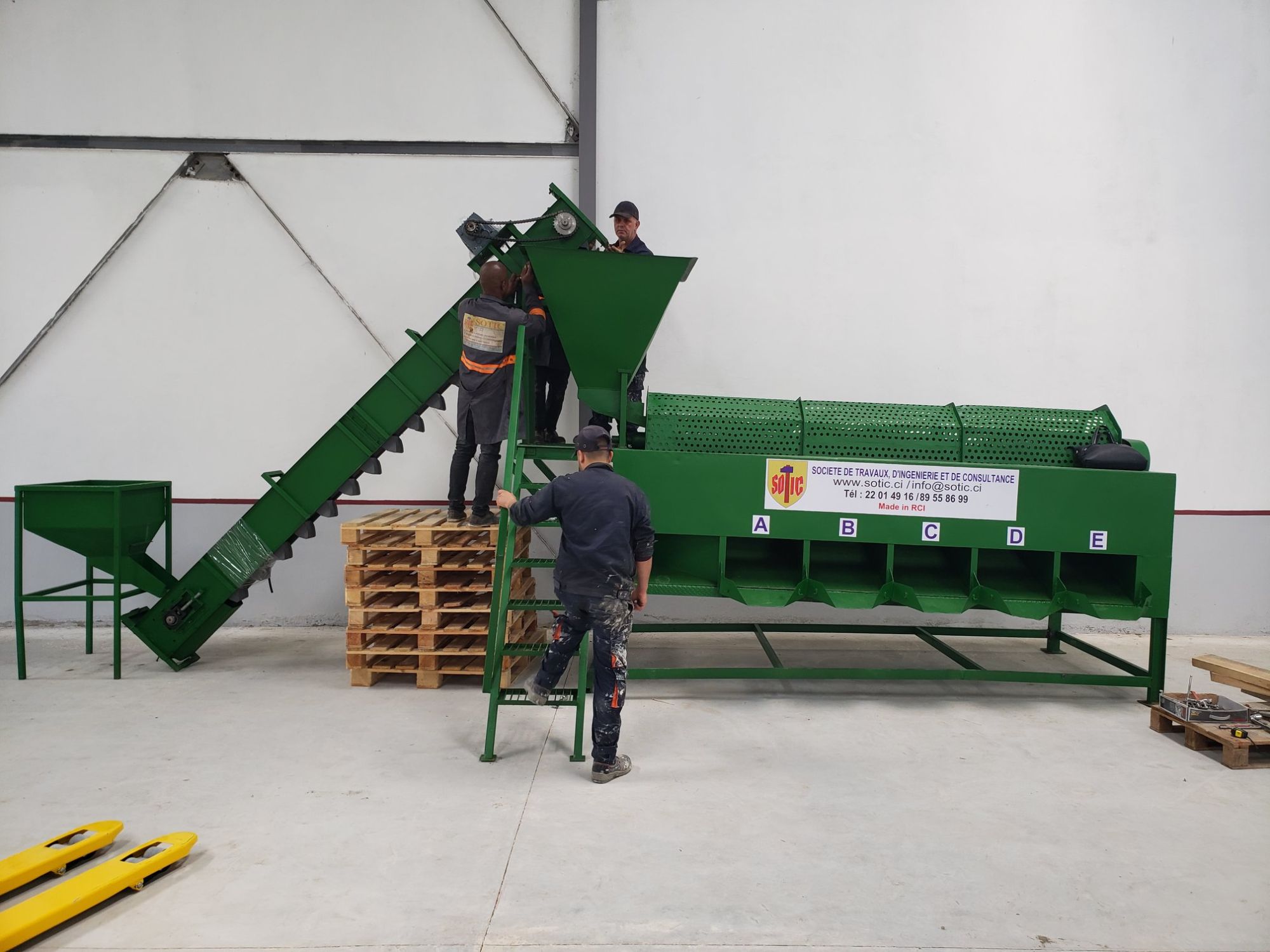
Automatic sizer
Sorts raw nuts into four to six size classes: the first condition of a high whole-kernel rate.
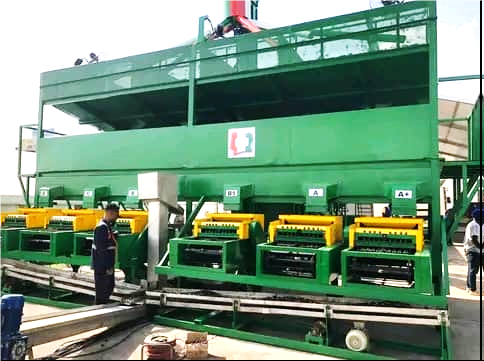
Automatic shelling line
Mechanised shelling line with paired blades, fed by size class.
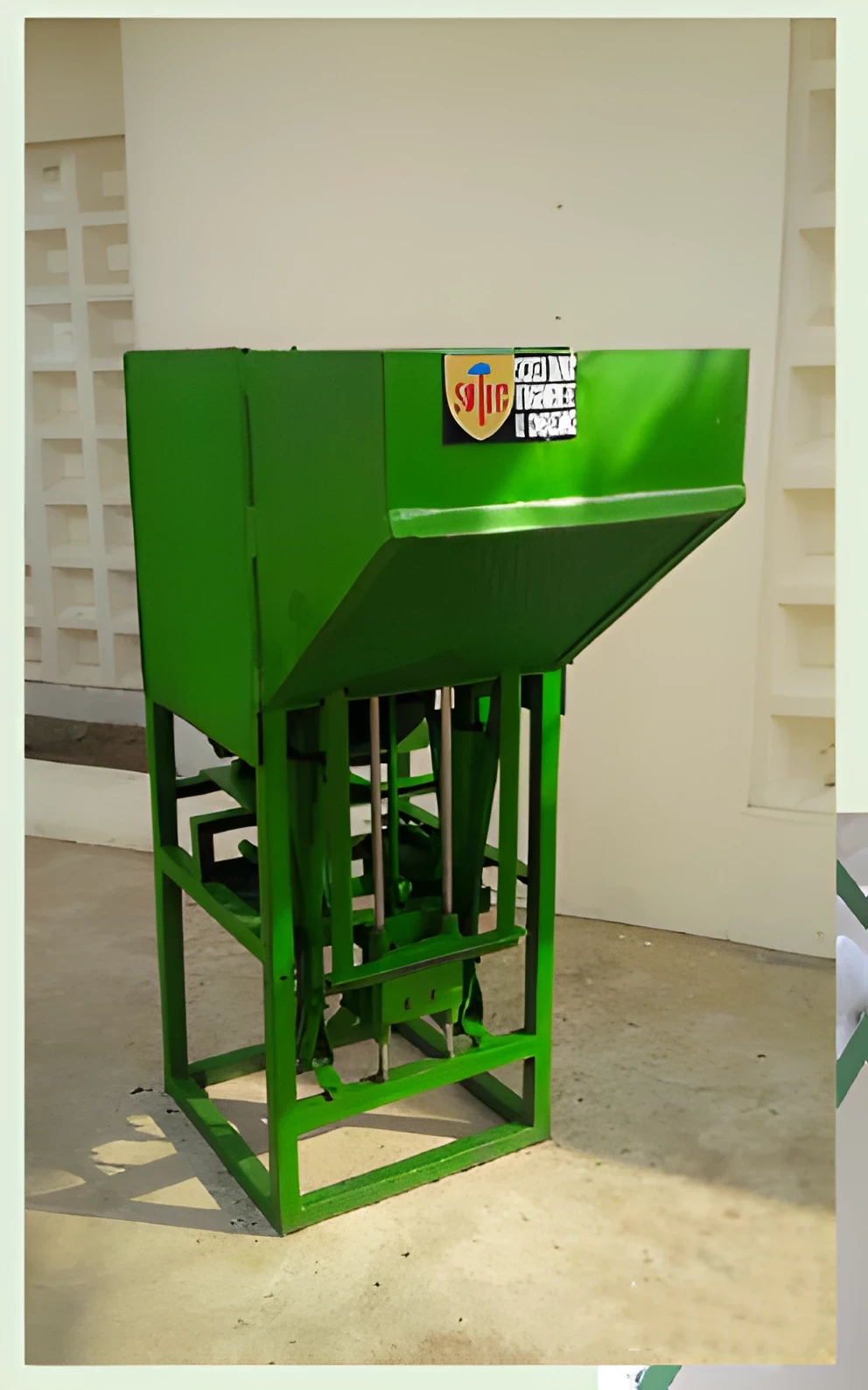
Semi-automatic sheller
Assisted shelling station: measured investment, flexibility and a high whole-kernel rate.
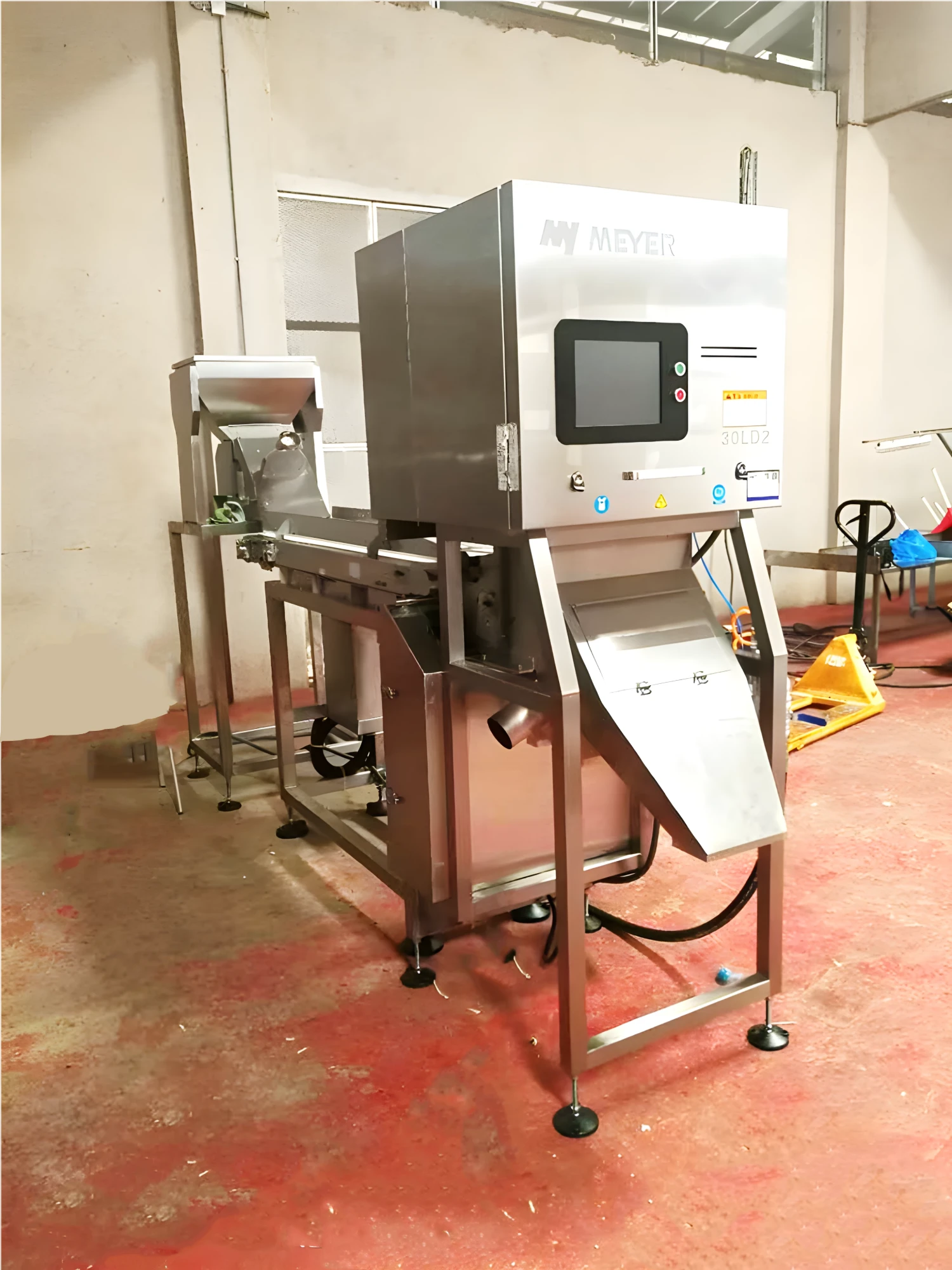
Optical colour sorter
Sorting by colorimetric analysis with pneumatic ejection of non-conforming kernels.