Home › Our equipment › Cashew › Automatic sizer
Automatic sizer
Sorts raw nuts into four to six size classes: the first condition of a high whole-kernel rate.
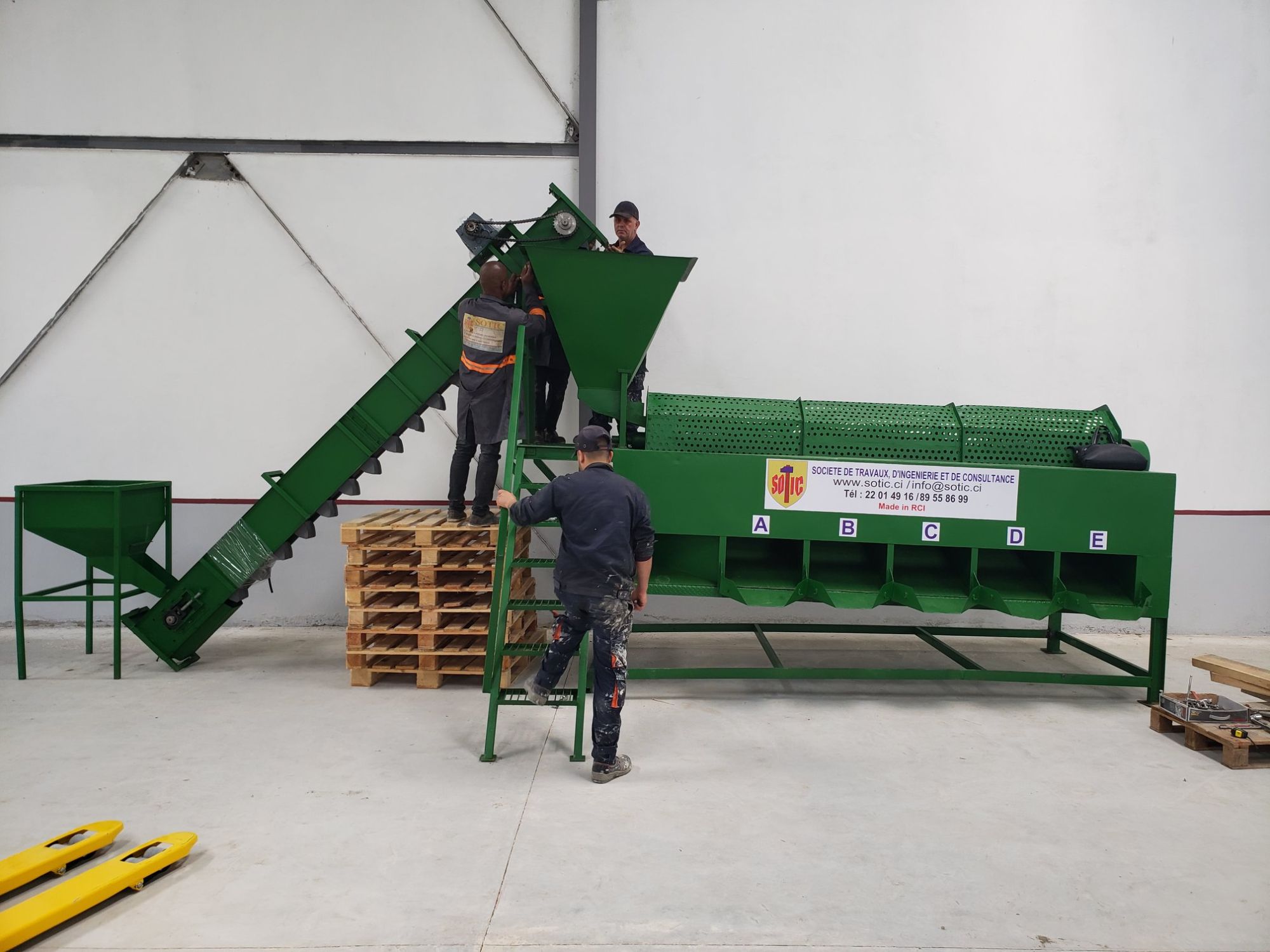
What this machine does
The sizer is the most underestimated machine in a shelling unit, yet it is the one that governs the performance of all the others. A sheller works with blades set for a given size class: fed with mixed nuts, it crushes the small ones and only partly opens the large ones. The whole-kernel rate, the main determinant of the batch price, is therefore decided here first.
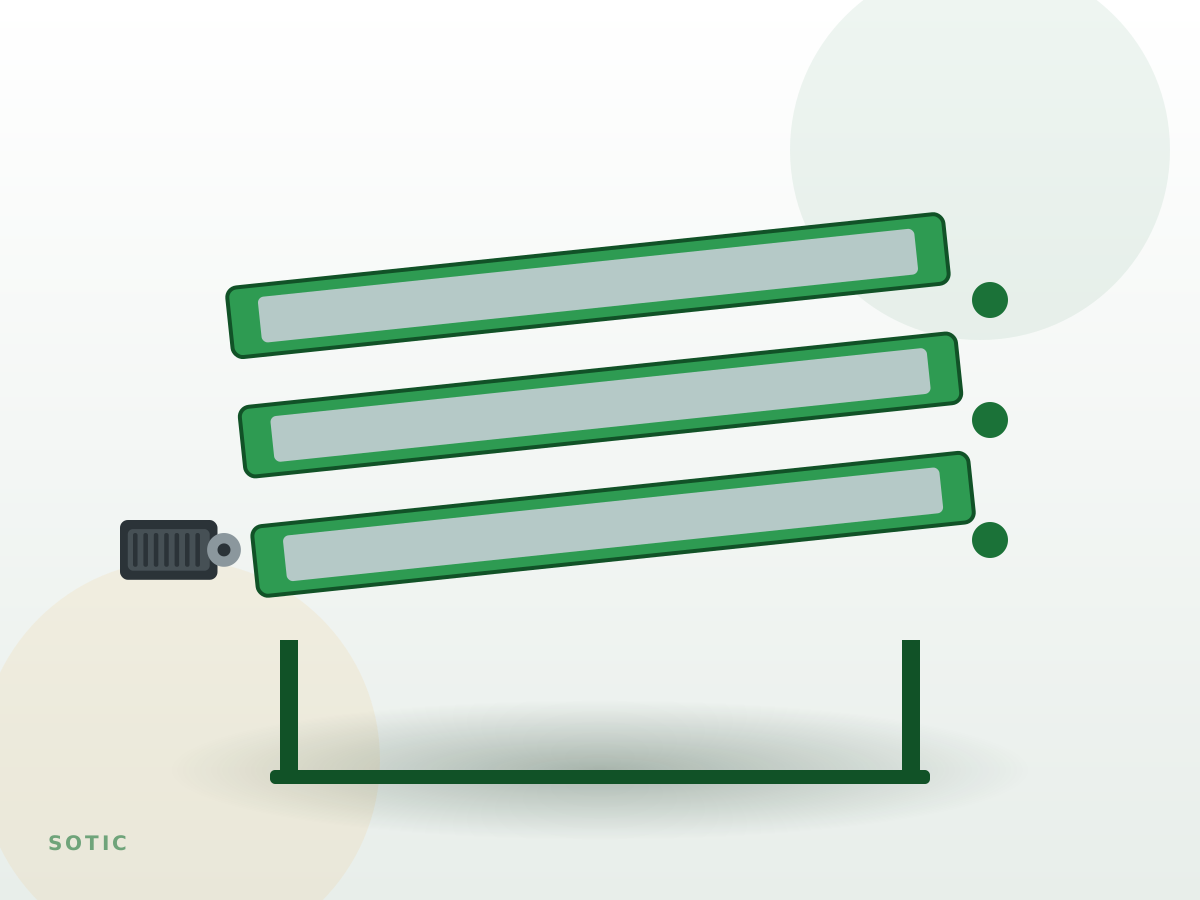
Sizing is done by passing the nuts over a rotating cylinder with increasing perforations or over stacked vibrating screens. Each nut falls through the first aperture compatible with its section into the corresponding hopper. A steady feed rate is essential: overloading creates a mattress of nuts that masks the perforations and distorts the sorting, with large nuts found in the small classes.
See the sector CashewAt a glance
- ReferenceCAJ-CAL
- SectorCashew
- PurposeSorts raw nuts into four to six size classes: the first condition of a high whole-kernel rate.
A detailed PDF data sheet will be available in the document centre once produced.
The parts that do the work
Sizing cylinder or screens
Increasing perforations delivering four to six classes, with interchangeable screens according to nut origin.
Regulated feed
Hopper and distributor maintaining a constant rate, the condition of reliable sorting.
Receiving hoppers
One outlet per class, so that each sheller can then be fed with a uniform size.
Pre-cleaning
Removal of coarse impurities and immature nuts before sizing.
Technical data and configurations
| Characteristic | Indicative value |
|---|---|
| Indicative throughput | 0.5 to 3 t/h of raw nuts |
| Installed power | 1.5 to 5.5 kW |
| Number of classes | 4 to 6 |
| Screens | interchangeable by origin and season |
| Residual impurities | target below 1 % |
| Structure | treated steel, protected product contact |
| Feed | hopper with rate regulation |
| Outlets | independent hopper per size |
These are usual design ranges for this type of machine, intended to guide early thinking. The contractual characteristics of the equipment actually manufactured — throughputs measured at acceptance, absorbed power, real footprint and weight — are established by the SOTIC design office and stated in the technical offer.
Available configurations
- Rotating cylinder version or stacked vibrating screens.
- Number of classes adapted to the shelling process chosen.
- Integration of a densimetric pre-cleaning station.
Installation requirements
- Sited at the head of the line, at the raw-nut store outlet.
- Outlet height compatible with feeding the cooking or shelling stations.
- Ventilated room, the operation generating dust.
- Floor able to take the vibration and allowing cleaning beneath the machine.
Maintenance and safety at the workstation
A machine lasts as long as its maintenance does. The points below appear in the preventive maintenance plan handed over at acceptance and are covered during operator training.
Preventive maintenance
- Check the condition of the perforations: a distorted screen silently falsifies the whole sorting.
- Clean the screens at the end of the shift, fines and debris accumulating there.
- Check anti-vibration mounts and fastener tightness.
- Check the feed rate at every batch change.
Safety
- Hopper protected by a grille during operation.
- Isolation before any screen change.
- Dust mask recommended during cleaning.
Before ordering this machine
Four classes are an operational minimum; six appreciably improve the whole-kernel rate but complicate the organisation of the shelling stations, which then have more settings to manage. The right number depends on the actual spread of the nuts received: with nuts of uniform origin four are enough; with heterogeneous batches from multiple collections, six are justified.
Settings must be checked every season and often for every origin. Average nut size varies with rainfall, variety and orchard management. Keeping last year's settings without checking them is one of the most frequent causes of an unexplained fall in the whole-kernel rate.
Request a quote: Automatic sizer
Tell us the throughput you are aiming for, the material to be processed and the energy available on your site: we come back with a reasoned configuration and a price, rather than a catalogue rate.
- Technical answer: we first check that this machine genuinely matches your need.
- Tailored configuration: size, drive, options and wear parts defined with you.
- Complete pricing: equipment, transport, erection, commissioning and training.
- Next steps: civil works, connections and maintenance where required.
First reply target: 48 working hours.
Other machines in the Cashew
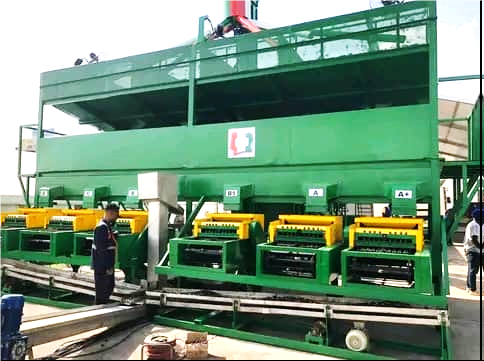
Automatic shelling line
Mechanised shelling line with paired blades, fed by size class.
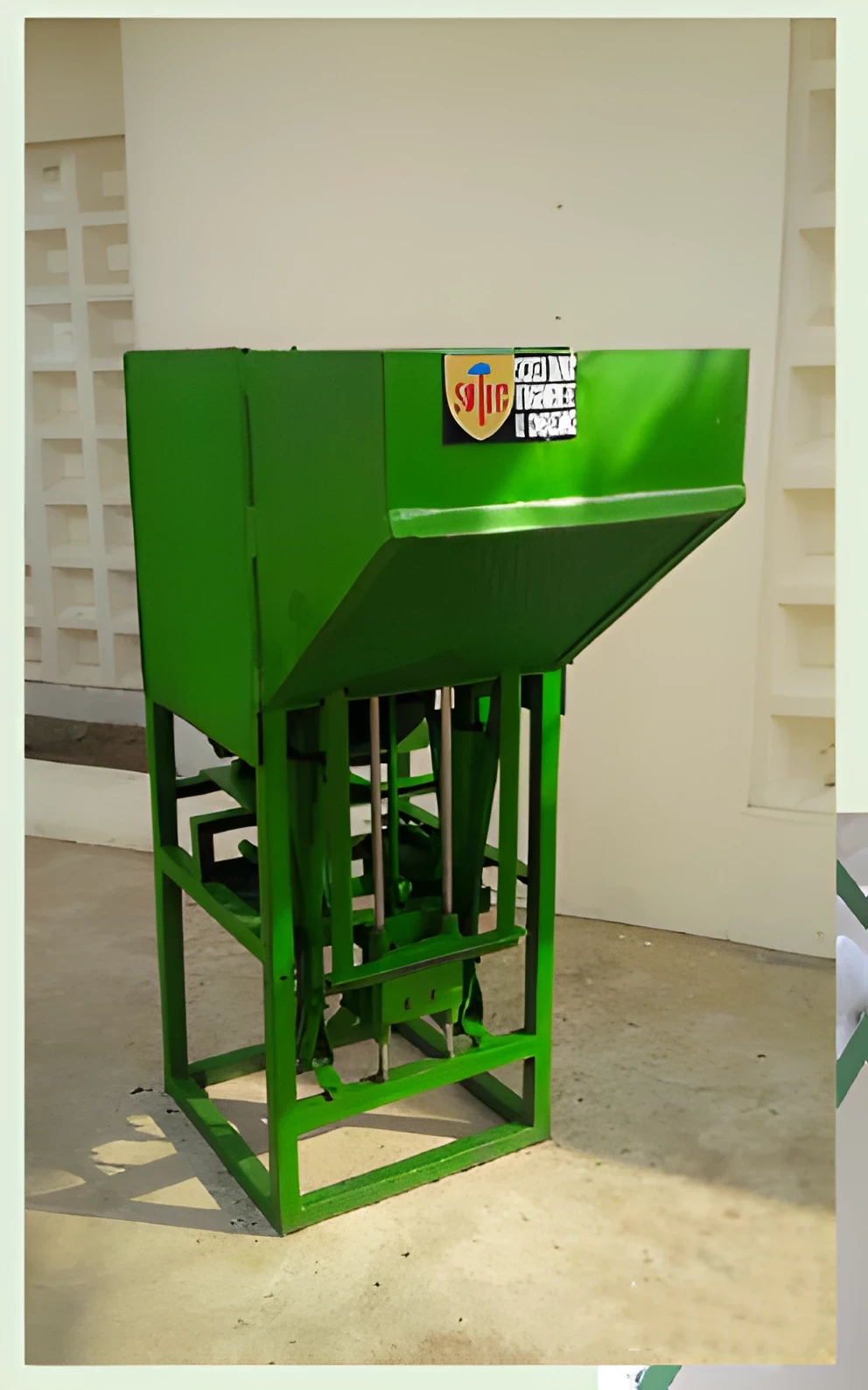
Semi-automatic sheller
Assisted shelling station: measured investment, flexibility and a high whole-kernel rate.
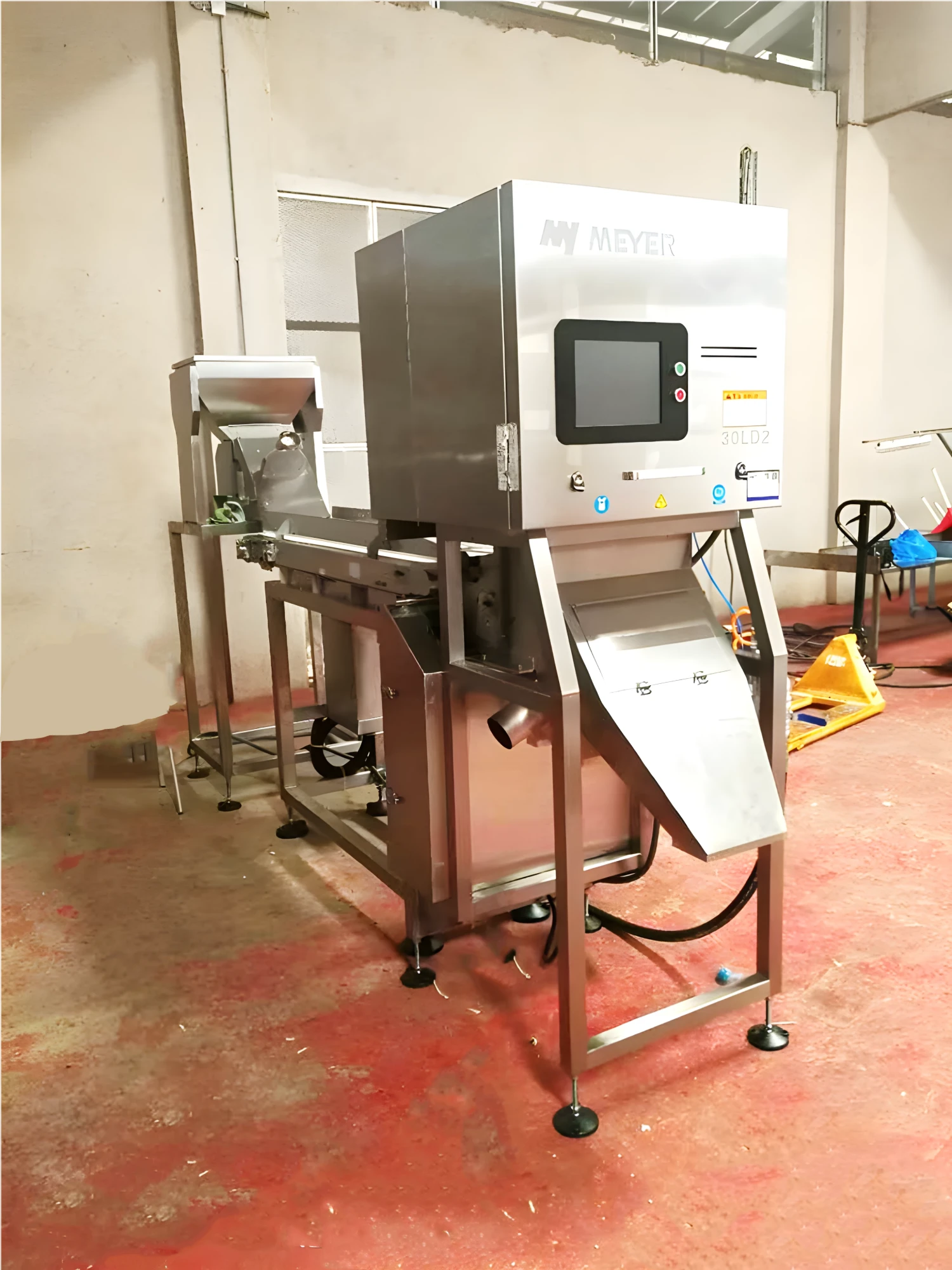
Optical colour sorter
Sorting by colorimetric analysis with pneumatic ejection of non-conforming kernels.
Whole kernel grader
Grades whole kernels by commercial grade on vibrating tables.