Home › Our equipment › Cashew › Automatic shelling line
Automatic shelling line
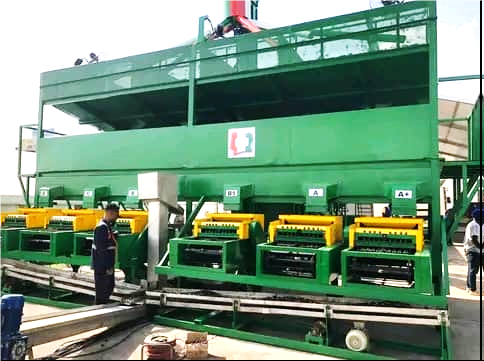
Mechanised shelling line with paired blades, fed by size class.
What this machine does
The automatic sheller opens the shell by parting rather than by crushing. Two profiled blades matching the section of the nut penetrate the shell along its plane of symmetry, then move apart: the two half-shells separate, releasing the kernel intact. This principle is the only one that achieves high whole-kernel rates at industrial cadence, provided the nuts have been correctly sized and conditioned beforehand.
The machine never makes up for a preparation fault. A nut insufficiently humidified and steamed keeps a shell adhering to the kernel; a nut that is too wet is crushed. This is why the performance of an automatic line is judged on the whole sizing-humidification-cooking-resting-shelling sequence, not on the machine alone. The CNSL released at opening also calls for corrosion-resistant design and organised capture.
See the sector CashewAt a glance
- ReferenceCAJ-DEA
- SectorCashew
- PurposeMechanised shelling line with paired blades, fed by size class.
A detailed PDF data sheet will be available in the document centre once produced.
The parts that do the work
Paired-blade stations
A bank of stations working in parallel, each set for one size class.
Individual feeding
Each nut is presented singly and oriented, the condition of a clean opening.
Separate discharge
Kernels and shells directed to two distinct circuits from the station outlet.
CNSL capture
Collection of the released liquid, with materials resistant to its chemical aggressiveness.
Technical data and configurations
| Characteristic | Indicative value |
|---|---|
| Cadence | according to the number of stations and the size processed |
| Whole-kernel rate | target above 85 % (depends on conditioning) |
| Feed | by size class, after cooking and resting |
| Adjustment | blade clearance per size class |
| Materials | treated against the aggressiveness of CNSL |
| Outlets | kernels / shells separated |
| Installed power | according to line configuration |
| Safety | guards and capture at the stations |
These are usual design ranges for this type of machine, intended to guide early thinking. The contractual characteristics of the equipment actually manufactured — throughputs measured at acceptance, absorbed power, real footprint and weight — are established by the SOTIC design office and stated in the technical offer.
Available configurations
- Number of stations scalable to the annual tonnage processed.
- Continuous line with conveyors or independent stations.
- Integration of the CNSL collection and storage circuit.
Installation requirements
- Ventilated room with capture at the stations: CNSL vapours are irritant.
- Chemically resistant floor with falls and collection of drips.
- Electrical supply sized for the whole bank of stations.
- Flow layout avoiding any crossing between shells and kernels.
Maintenance and safety at the workstation
A machine lasts as long as its maintenance does. The points below appear in the preventive maintenance plan handed over at acceptance and are covered during operator training.
Preventive maintenance
- Check and resharpen the blades: dulling lowers the whole-kernel rate before it stops production.
- Clean the balm deposited on the working parts, which hardens and jams the mechanisms.
- Check settings at every size change.
- Inspect the capture circuits and the condition of exposed materials.
Safety
- Skin protection is mandatory: CNSL causes chemical burns.
- Ventilation running continuously during production.
- Isolation before any work on the blades.
Before ordering this machine
The automatic sheller takes the lead at high, regular tonnages, when skilled labour becomes the limiting factor. The semi-automatic route, run by experienced operators, reaches excellent whole-kernel rates, costs far less to buy and stays very flexible in volume. We systematically cost both scenarios on the client's real tonnage before recommending either.
Hydrothermal conditioning, ahead of blade setting and far ahead of the make of machine. A nut correctly humidified, steamed and then rested twelve to twenty-four hours shells cleanly; the same nut rushed through breaks, whatever the equipment.
Request a quote: Automatic shelling line
Tell us the throughput you are aiming for, the material to be processed and the energy available on your site: we come back with a reasoned configuration and a price, rather than a catalogue rate.
- Technical answer: we first check that this machine genuinely matches your need.
- Tailored configuration: size, drive, options and wear parts defined with you.
- Complete pricing: equipment, transport, erection, commissioning and training.
- Next steps: civil works, connections and maintenance where required.
First reply target: 48 working hours.
Other machines in the Cashew
Automatic sizer
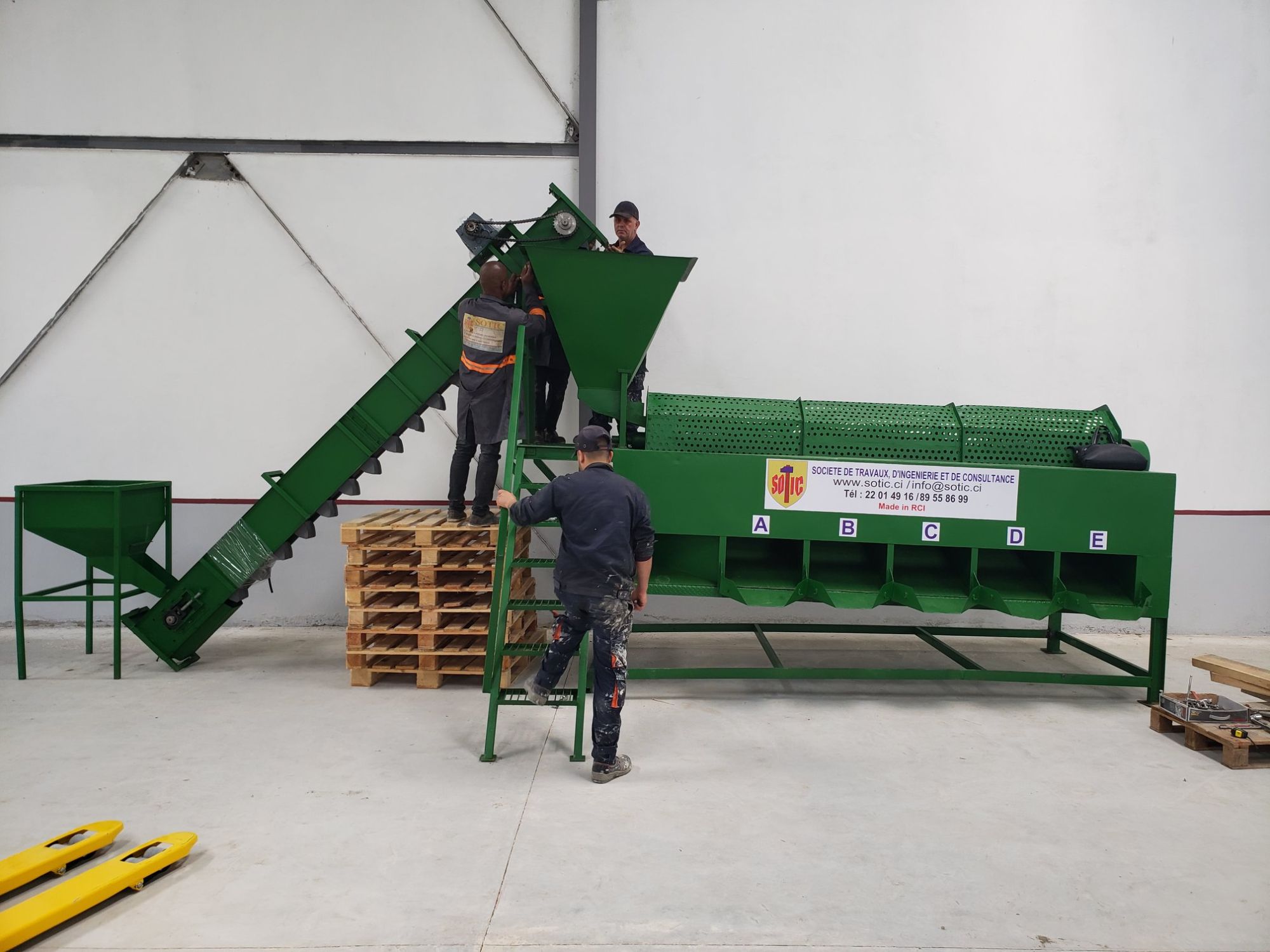
Sorts raw nuts into four to six size classes: the first condition of a high whole-kernel rate.
Semi-automatic sheller
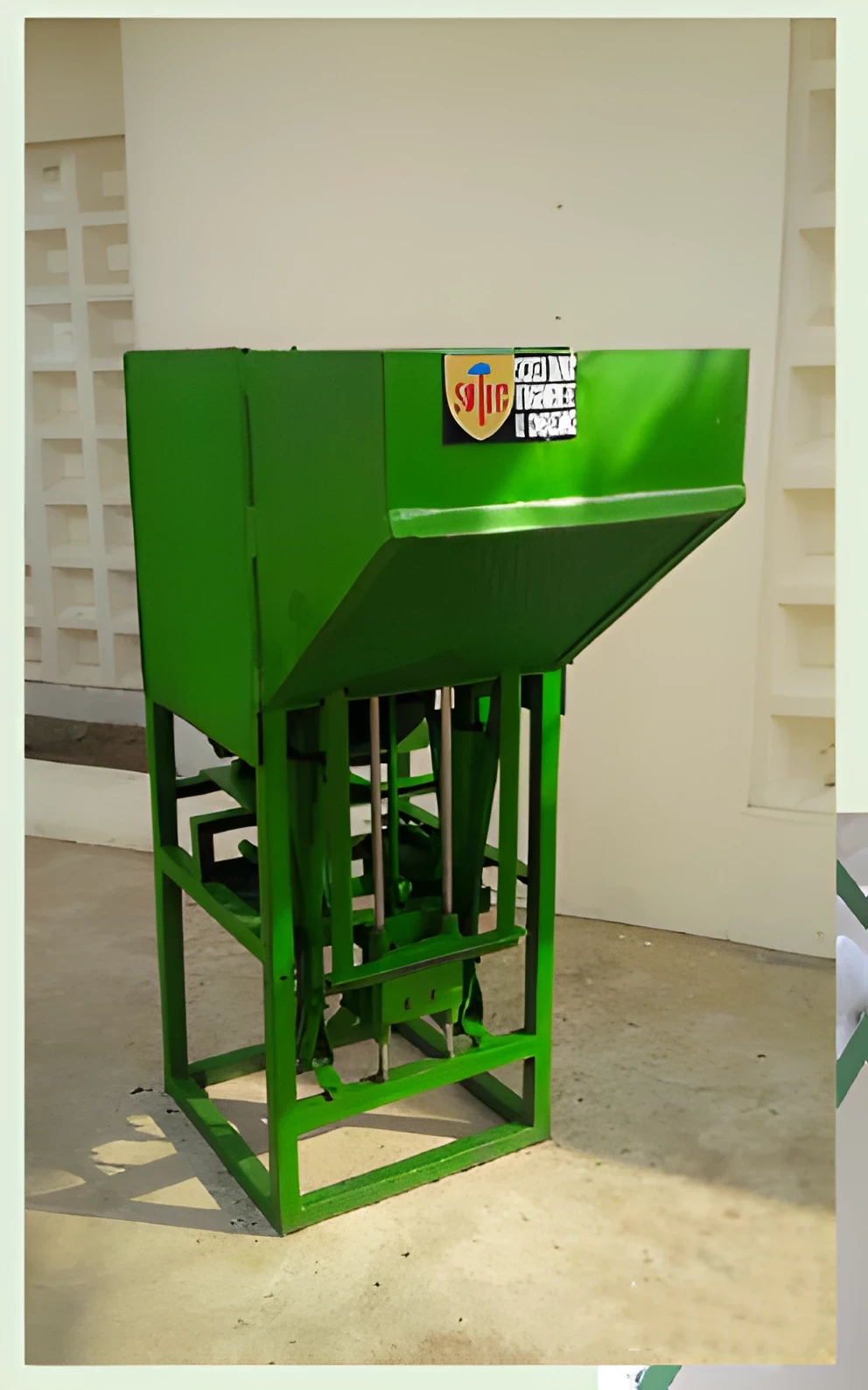
Assisted shelling station: measured investment, flexibility and a high whole-kernel rate.
Optical colour sorter
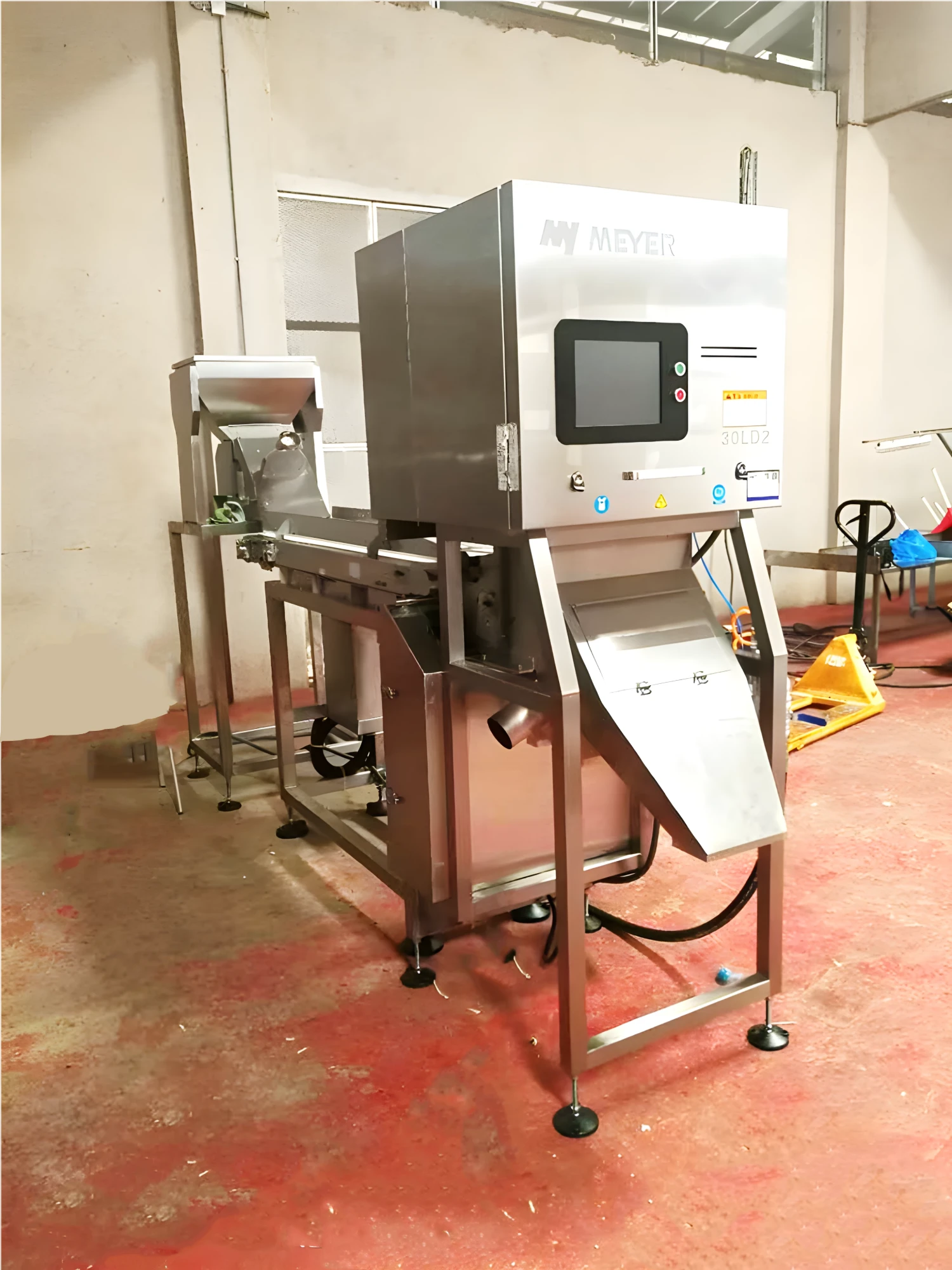
Sorting by colorimetric analysis with pneumatic ejection of non-conforming kernels.
Whole kernel grader
Grades whole kernels by commercial grade on vibrating tables.