Home › Our equipment › Cashew › Broken kernel grader
Broken kernel grader
Turns broken kernels into marketable, clearly defined categories.

What this machine does
No shelling unit reaches one hundred per cent whole kernels: a proportion of breakage is unavoidable. The question is not to eliminate it but to value it correctly, because broken kernels have their own markets — confectionery, bakery, butters and pastes, industrial processing — with defined categories running from halves to pieces and fines.
The broken-kernel grader applies the principle of vibrating tables with calibrated screens, adapted to fragments of irregular shape and smaller size. Careful grading turns a by-product sold at a discount into several separately valued categories. On a medium-sized unit, the revenue gap between untreated bulk breakage and the same breakage properly graded is far from marginal.
See the sector CashewAt a glance
- ReferenceCAJ-CLB
- SectorCashew
- PurposeTurns broken kernels into marketable, clearly defined categories.
A detailed PDF data sheet will be available in the document centre once produced.
The parts that do the work
Stacked fine screens
Separates halves, pieces and fines according to the commercial categories targeted.
Adjustable vibration
Amplitude suited to light, irregular fragments, which behave differently from whole kernels.
Dust extraction
Captures fines and testa residues to keep the graded product clean.
Separate outlets
One chute per category, ready for packing.
Technical data and configurations
| Characteristic | Indicative value |
|---|---|
| Indicative throughput | 0.2 to 1.5 t/h |
| Installed power | 1.5 to 4 kW |
| Categories | halves, pieces, fines according to screens |
| Settings | amplitude and slope |
| Extraction | dust capture recommended |
| Product contact materials | food-grade stainless steel |
| Screens | interchangeable |
| Mounting | anti-vibration mounts |
These are usual design ranges for this type of machine, intended to guide early thinking. The contractual characteristics of the equipment actually manufactured — throughputs measured at acceptance, absorbed power, real footprint and weight — are established by the SOTIC design office and stated in the technical offer.
Available configurations
- Screen sets according to the commercial categories of the target market.
- Version with integrated fines extraction.
- Directly paired with the whole-kernel grader.
Installation requirements
- Station sited immediately next to whole-kernel grading, for a logical flow.
- Extraction connected to a cyclone or a filter.
- Rigid floor with anti-vibration mounts.
- Adjoining packing area to limit handling of the finished product.
Maintenance and safety at the workstation
A machine lasts as long as its maintenance does. The points below appear in the preventive maintenance plan handed over at acceptance and are covered during operator training.
Preventive maintenance
- Daily cleaning of the fine screens, which are particularly prone to blinding.
- Check the extraction circuit and empty the cyclone.
- Check screen condition and replace as soon as distortion appears.
- Check general tightness, vibration gradually loosening fasteners.
Safety
- Wear a mask when cleaning: kernel fines are airborne and irritant.
- Isolation before working on the screens.
- Do not disable extraction during operation.
Before ordering this machine
Almost always. Grading costs little in energy and labour, while the price difference between identified categories and undifferentiated bulk is significant. It is one of the rare stations where a modest investment pays for itself purely through better valuation, with no productivity gain at all.
Kernel fines and dust find outlets in processing — pastes, butters, flours — provided they are collected cleanly, separately and without contamination by testa. Badly managed, they become waste and a hygiene problem in the workshop. The decision to value them is taken when the extraction circuit is designed.
Request a quote: Broken kernel grader
Tell us the throughput you are aiming for, the material to be processed and the energy available on your site: we come back with a reasoned configuration and a price, rather than a catalogue rate.
- Technical answer: we first check that this machine genuinely matches your need.
- Tailored configuration: size, drive, options and wear parts defined with you.
- Complete pricing: equipment, transport, erection, commissioning and training.
- Next steps: civil works, connections and maintenance where required.
First reply target: 48 working hours.
Other machines in the Cashew
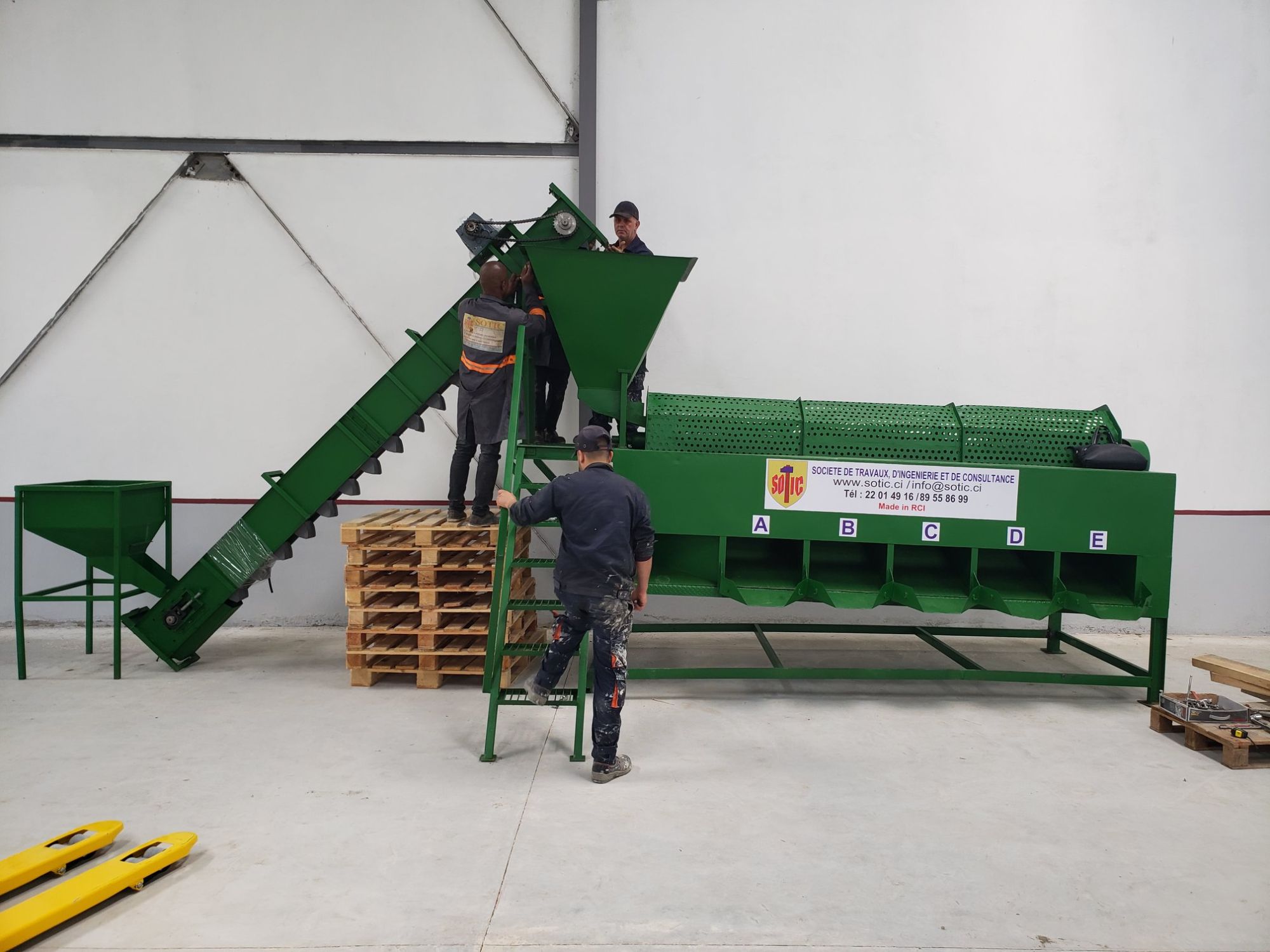
Automatic sizer
Sorts raw nuts into four to six size classes: the first condition of a high whole-kernel rate.
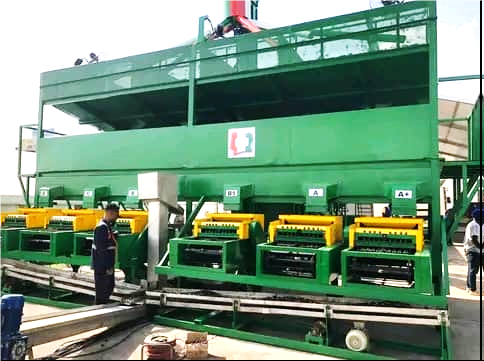
Automatic shelling line
Mechanised shelling line with paired blades, fed by size class.
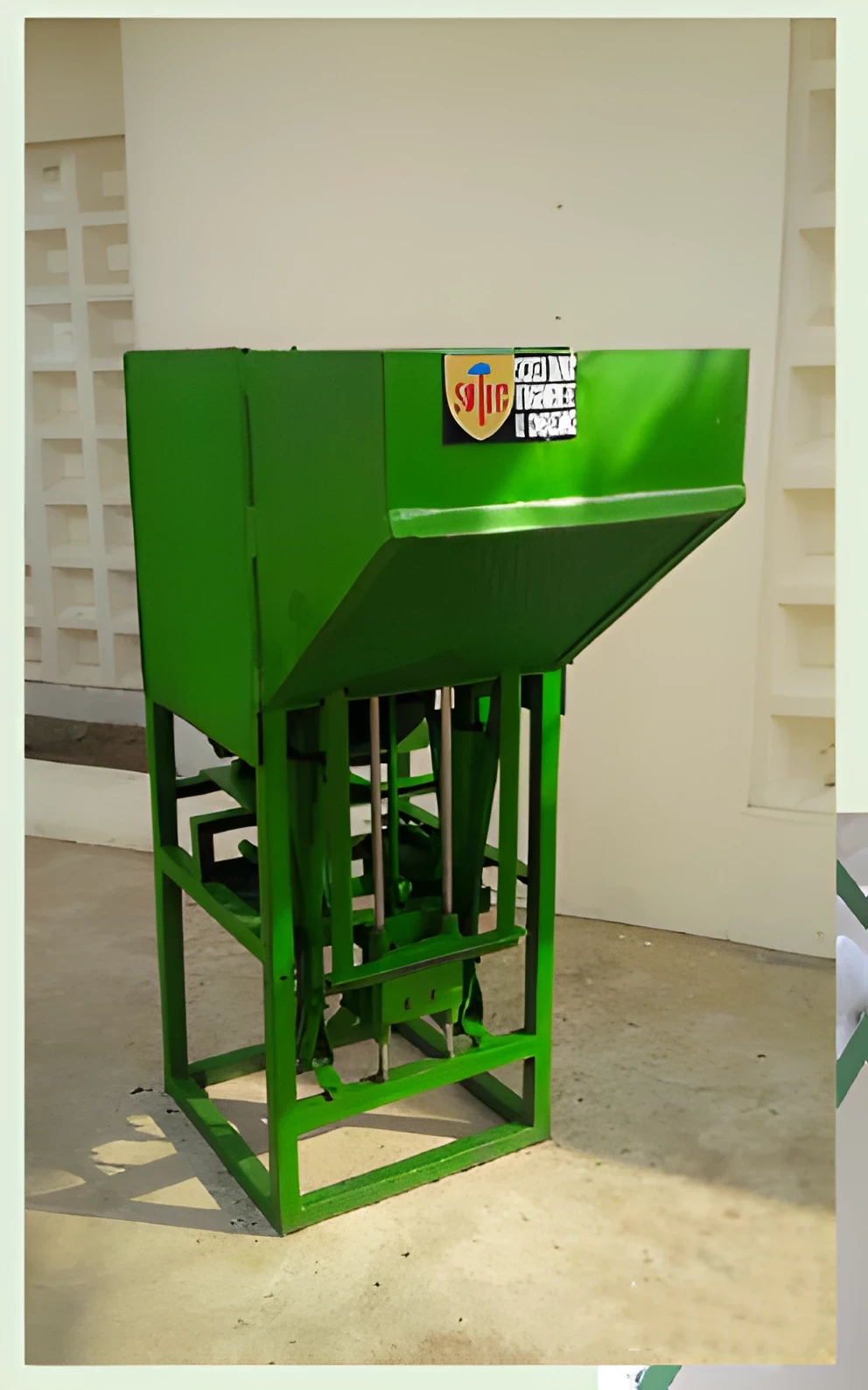
Semi-automatic sheller
Assisted shelling station: measured investment, flexibility and a high whole-kernel rate.
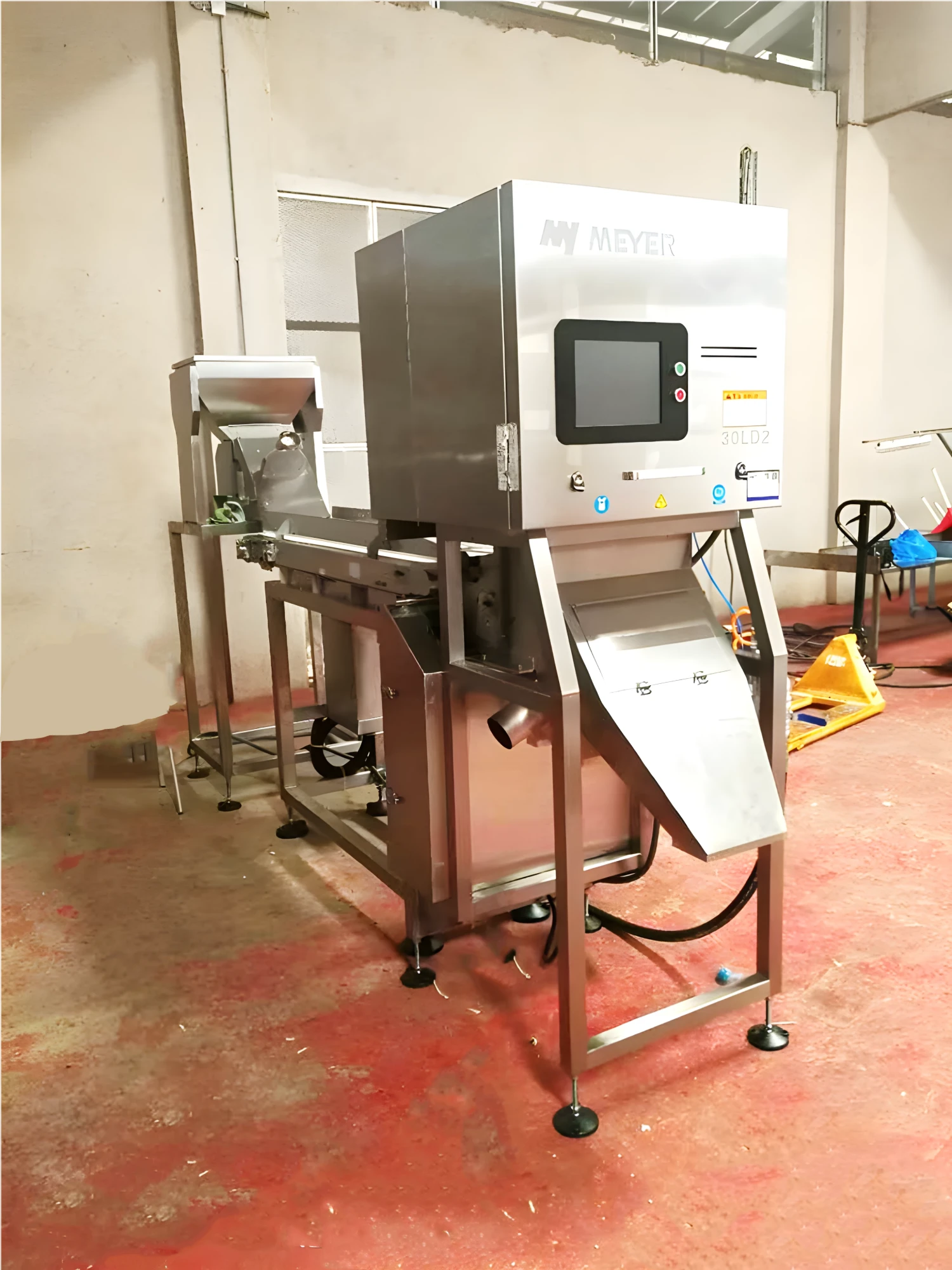
Optical colour sorter
Sorting by colorimetric analysis with pneumatic ejection of non-conforming kernels.