Home › Our equipment › Oil palm › Palm oil press
Palm oil press
Mechanical extraction by reducing-pitch screw, with counter-pressure adjustable while running.
What this machine does
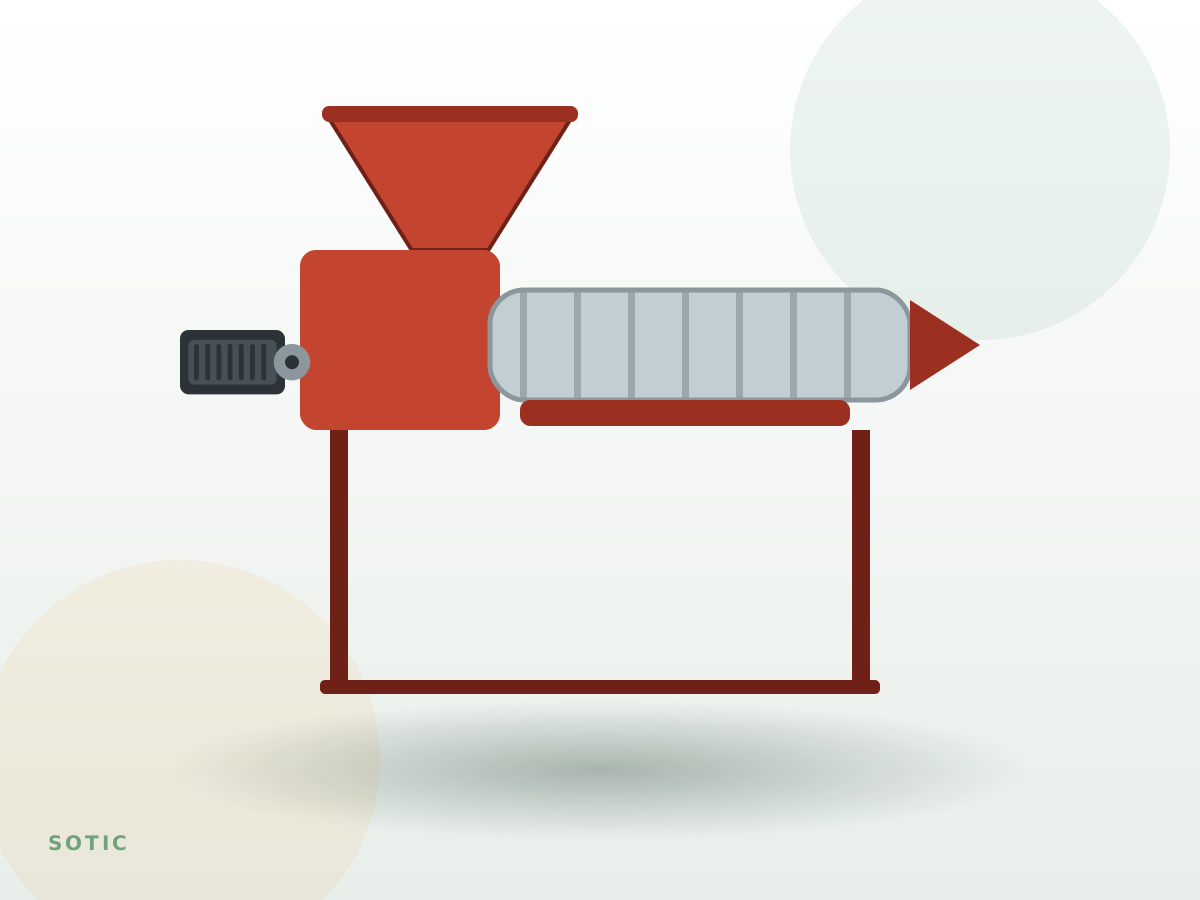
The press extracts oil from the digested mass by progressive compression. A reducing-pitch screw drives the material through a draining barred cage: the oil escapes through the slots while the solid phase is discharged at the end of the screw as cake, a mixture of fibre and nuts. The essential adjustment is the counter-pressure cone, adjustable while running.
That adjustment is a permanent trade-off, never definitive. Tightening the cone raises pressure and therefore extraction rate, but increases nut breakage: broken kernels enter the oil circuit, degrade quality and are lost to the kernel line. Loosening it protects the nuts but leaves more oil in the cake. The optimum depends on the ripeness of the bunches received and must be reviewed regularly, on the basis of two measurements: residual oil in the cake and the proportion of broken nuts.
See the sector Oil palmAt a glance
- ReferencePAL-PRE
- SectorOil palm
- PurposeMechanical extraction by reducing-pitch screw, with counter-pressure adjustable while running.
A detailed PDF data sheet will be available in the document centre once produced.
The parts that do the work
Reducing-pitch screw
Progressive compression of the mass along the axis, creating the extraction pressure.
Barred cage
Calibrated slots letting oil through while retaining fibre and nuts.
Counter-pressure cone
Adjusting member at the outlet, adjustable while running, which sets the pressing balance point.
Crude oil collection
Receiving tank directing the oil to screening and clarification.
Technical data and configurations
| Characteristic | Indicative value |
|---|---|
| Indicative throughput | 0.5 to 5 t of fruit/h depending on model |
| Installed power | 11 to 55 kW |
| Adjustment | counter-pressure cone adjustable while running |
| Residual oil in cake | to be minimised, measured by sampling |
| Broken nuts | to be limited, monitored in parallel |
| Wear parts | screw and cage bars, replaceable |
| Outlets | crude oil / cake |
| Operation | continuous |
These are usual design ranges for this type of machine, intended to guide early thinking. The contractual characteristics of the equipment actually manufactured — throughputs measured at acceptance, absorbed power, real footprint and weight — are established by the SOTIC design office and stated in the technical offer.
Available configurations
- Several capacities according to the daily tonnage of bunches.
- Double pressing to maximise extraction on large capacities.
- Manual or hydraulic counter-pressure adjustment.
Installation requirements
- Anchored concrete block: the machine transmits heavy forces and low-frequency vibration.
- Gravity feed from the digester, for a steady flow with no intermediate handling.
- Oil collection circuit with continuous falls to the clarifier.
- Cake removal to the kernel line and the boiler.
Maintenance and safety at the workstation
A machine lasts as long as its maintenance does. The points below appear in the preventive maintenance plan handed over at acceptance and are covered during operator training.
Preventive maintenance
- Weekly check of screw and cage bar wear, the main consumable item.
- Cleaning of the draining cage: progressive blinding lowers yield with no warning.
- Check the gearbox: level, temperature, absence of leaks.
- Continuous monitoring of the two setting indicators: residual oil and broken nuts.
Safety
- Never introduce a tool or a hand into the hopper while running.
- Full isolation before opening the cage.
- Stop immediately on abnormal noise: a metallic foreign body in the screw destroys the machine.
Before ordering this machine
The usual order of magnitude is between 18 and 22 % for a well-run mill, but that figure depends on the quality and ripeness of the bunches, the delay between cutting and processing, and the conduct of sterilisation and digestion. Quoting a rate without knowing the bunches processed is meaningless: we establish that value through trials on the client's own material.
Almost always because of wear on the screw and the bars, which increases clearances and lowers effective pressure. It is a slow phenomenon, hence hard to notice day to day, which is why residual oil in the cake should be measured periodically. The other frequent causes are insufficiently hot digestion and a blinded cage.
Request a quote: Palm oil press
Tell us the throughput you are aiming for, the material to be processed and the energy available on your site: we come back with a reasoned configuration and a price, rather than a catalogue rate.
- Technical answer: we first check that this machine genuinely matches your need.
- Tailored configuration: size, drive, options and wear parts defined with you.
- Complete pricing: equipment, transport, erection, commissioning and training.
- Next steps: civil works, connections and maintenance where required.
First reply target: 48 working hours.
Other machines in the Oil palm

Bunch steriliser
Steam treatment of bunches: the operation that sets the acidity of the entire production.
Bunch stripper
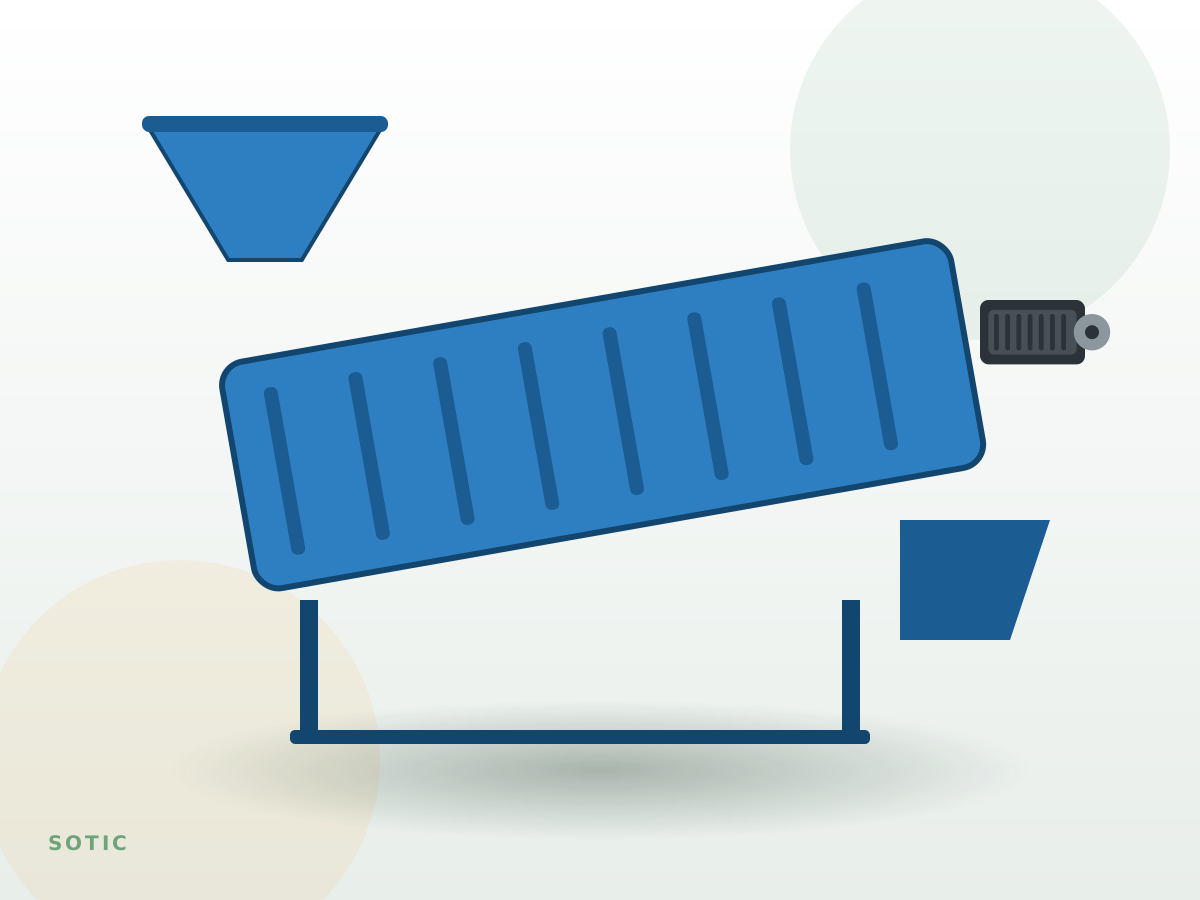
Separates fruit from empty bunches after sterilisation, in a rotating barred drum.
Palm fruit digester
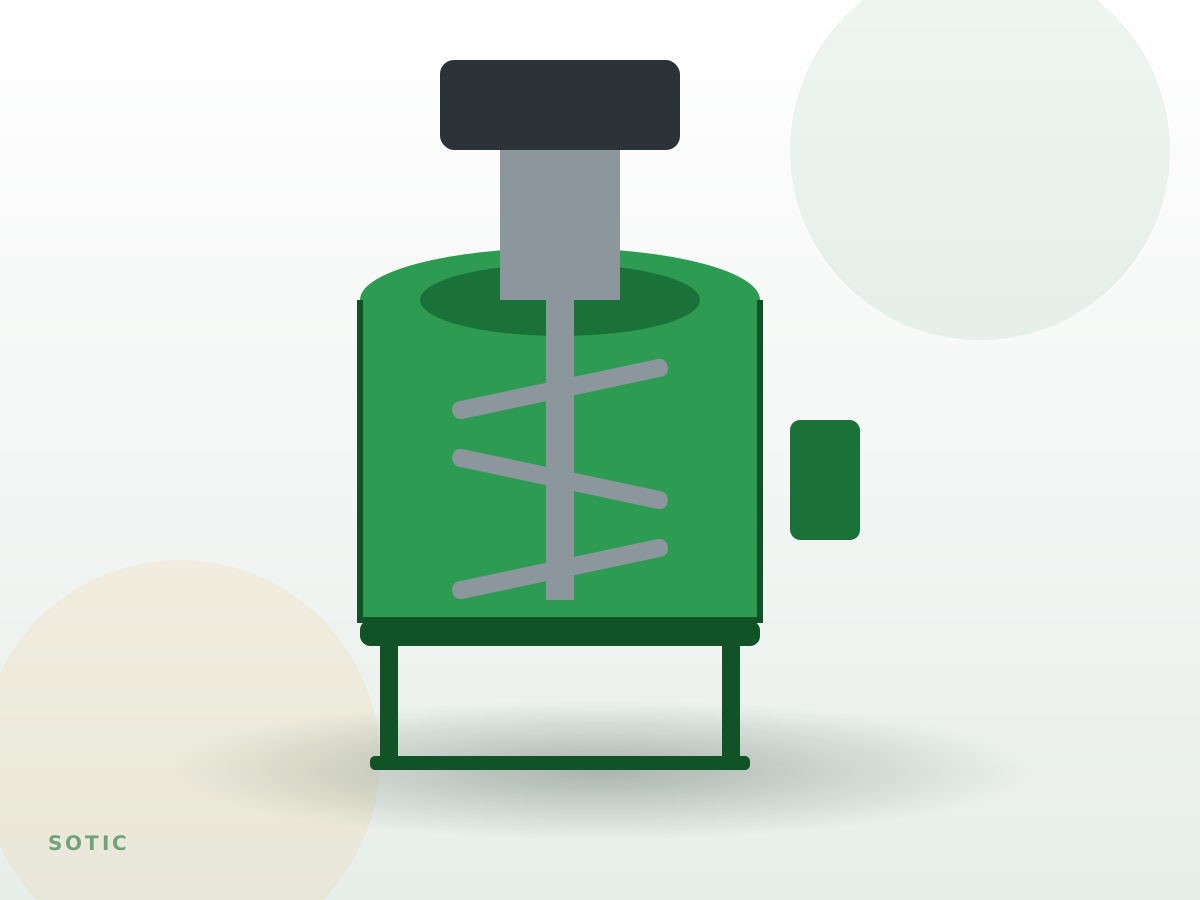
Heated mixing that breaks down the mesocarp and ruptures the oil-bearing cells.
Oil filter
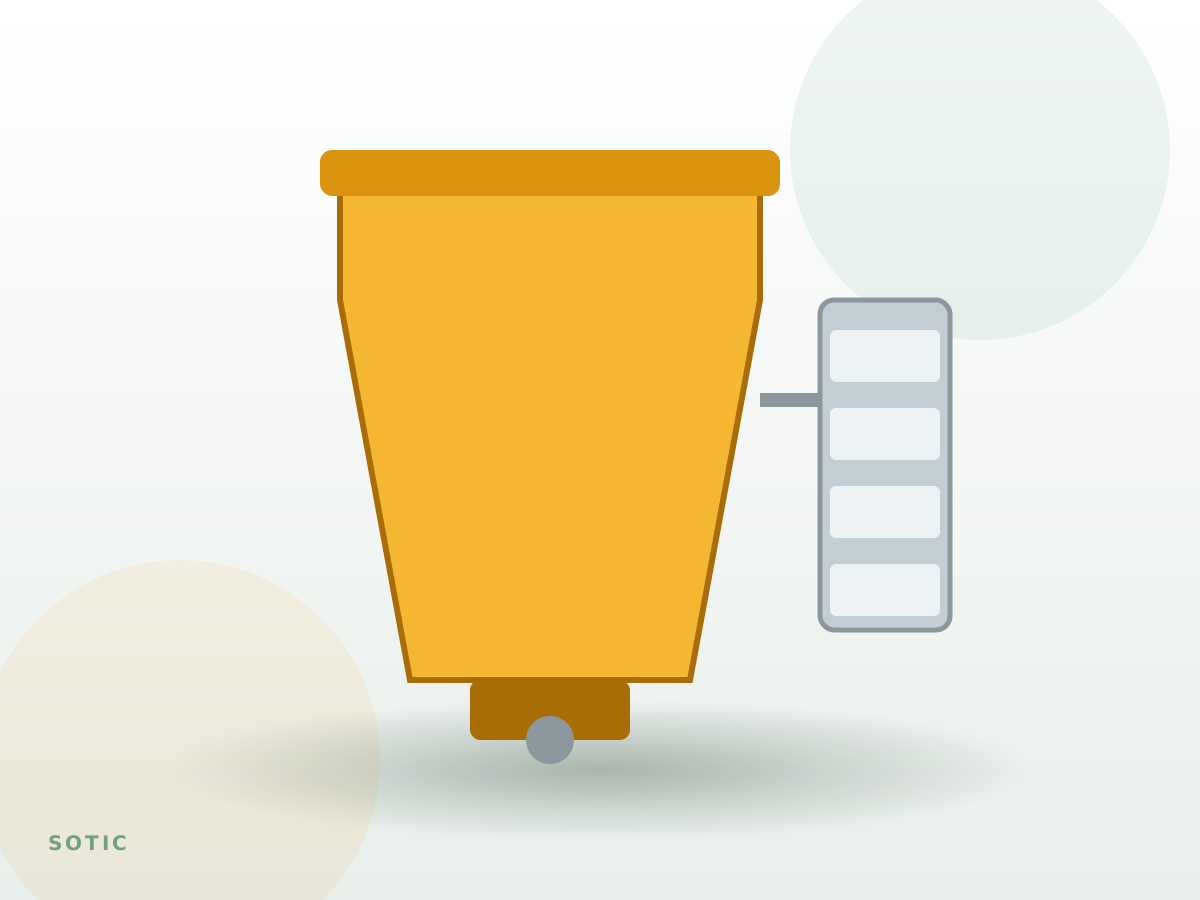
Clarifies crude oil by filtration, before storage or refining.