Home › Our equipment › Coffee & Cocoa
Capturing the value of the bean, beyond raw export
Conducted fermentation, controlled drying, repeatable roasting: the sensory quality of coffee and cocoa is built in the hours following harvest, then revealed — or lost — at roasting. Our equipment targets regularity at these two critical moments.
Quality is decided before the first buyer
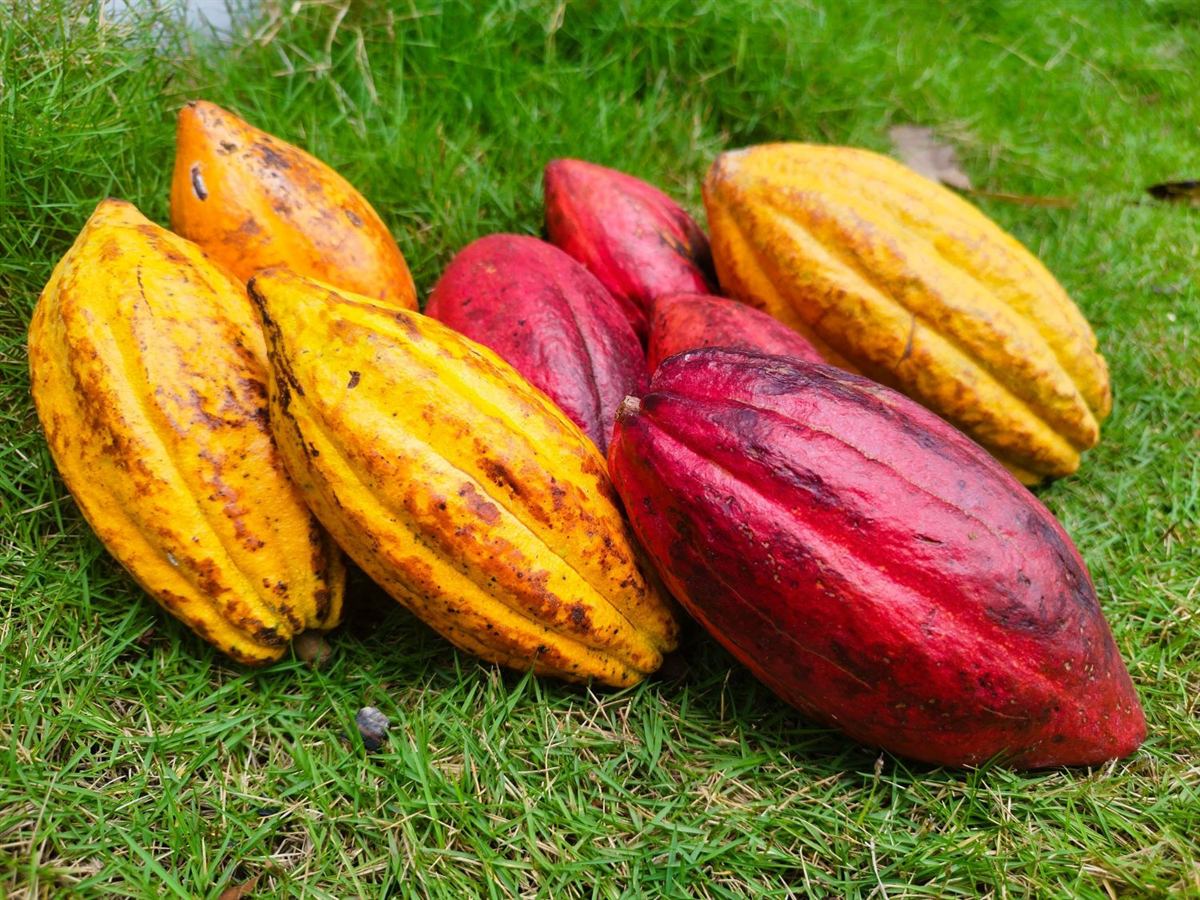
Merchantable cocoa only becomes aromatic at the end of a conducted fermentation: five to seven days during which the mucilaginous pulp is broken down by a succession of microbial populations, while the temperature of the mass rises above 45 °C, acetic acid penetrates the cotyledon and kills the embryo. It is that cell death that releases the aroma precursors. A shortened or uneven fermentation produces purple, astringent beans, discounted at sale.
The drying that follows is just as decisive. Dried too fast, the bean retains excessive acidity and cracks; dried too slowly or under humid cover, it develops moulds and undesirable compounds. The target is 7 to 8 % moisture: above that, fungal risk settles in during storage; below it, the bean becomes brittle and commercial weight is lost for nothing.
For coffee the logic is parallel but the parameters differ: rapid wet pulping or dry drying in cherry, careful hulling, then roasting at markedly higher temperatures over short times, where a few tens of seconds separate a balanced profile from a burnt one. Repeatability requires thermal control and rapid cooling at the end of the cycle.
Cocoa fermentation
5 to 7 days, mass temperature above 45 °C, regular turning.
Storage moisture
7 to 8 %: the compromise between fungal risk and loss of merchantable weight.
Cocoa roasting
110 to 140 °C according to the intended use (liquor, powder, chocolate making).
Coffee roasting
195 to 230 °C bean temperature, 8 to 14 minutes according to profile.
Technological ranges commonly accepted in the process literature; final profiles are established through trials on the client's own raw material.
From pod to liquor, from cherry to ground coffee
Two chains, one requirement: every thermal or mechanical operation must be repeatable from batch to batch, failing which quality becomes a lottery — and so does the selling price.
Pod breaking and pulping
Mechanical opening of the pods and extraction of the beans without injuring the cotyledon, or pulping of coffee cherries by controlled friction between rotor and screen, with clearance set to the size.
Operating parameters
- Cocoa throughput 0.5 to 3 t pods/h
- Damaged beans target < 2 %
- Water (wet coffee) 1 to 3 m³/t
Fermentation
Wooden boxes or draining tanks, insulated and covered, allowing the mass to heat and be turned periodically. Mucilage drainage must be organised to avoid stagnation.
Operating parameters
- Duration 5 to 7 days (cocoa)
- Turning every 24 to 48 h
- Mass depth 40 to 80 cm
Drying
Solar drying on sheltered racks, or mechanical drying with indirect hot air where the season demands guaranteed capacity. The exchanger prevents any contact between combustion gases and beans.
Operating parameters
- Air temperature 45 to 60 °C
- Final moisture 7 to 8 %
- Heating indirect, mandatory
Sorting, grading and storage
Removal of flat, broken and germinated beans and of foreign bodies; grading by size; storage on pallets in a ventilated room, away from floors and walls to limit moisture pick-up.
Operating parameters
- Cocoa bean count beans per 100 g
- Foreign bodies target < 0.5 %
- Storage jute bags, pallets, ventilation
Roasting
Rotating drum with indirect heating, control of bean temperature and recording of the roast curve, followed by rapid cooling with forced ventilation to freeze the profile.
Operating parameters
- Cocoa 110 to 140 °C
- Coffee 195 to 230 °C, 8 to 14 min
- Cooling < 4 min after discharge
Cracking, winnowing and grinding
Separation of the shell by cracking then air winnowing, followed by grinding of the nibs into cocoa liquor through successive passes to the required fineness, or grinding of coffee according to final use.
Operating parameters
- Residual shell target < 1.5 %
- Liquor fineness target < 30 µm
- Heat build-up controlled by cooling
The ranges given are orders of magnitude for design drawn from process practice; they are adjusted for each installation once the raw material actually processed has been characterised.
4 machines in the catalogue
Each machine has its own detailed sheet: role in the process chain, operating principle, indicative specifications, installation requirements, maintenance and a direct quotation request.

Cocoa pod breaker
Mechanical pod opening and bean extraction without injuring the cotyledon.
View the sheet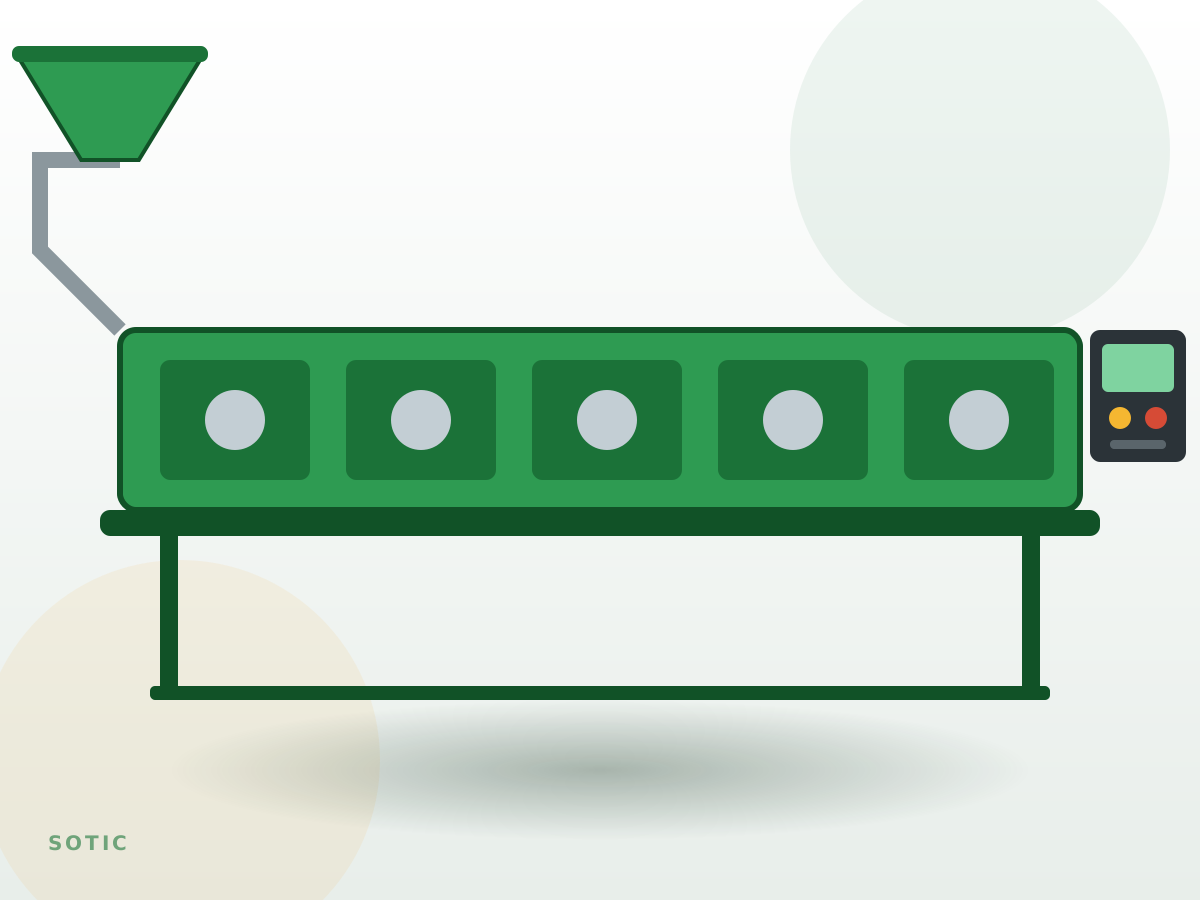
Cocoa winnower
Cracks roasted beans and separates the shell by air classification.
View the sheet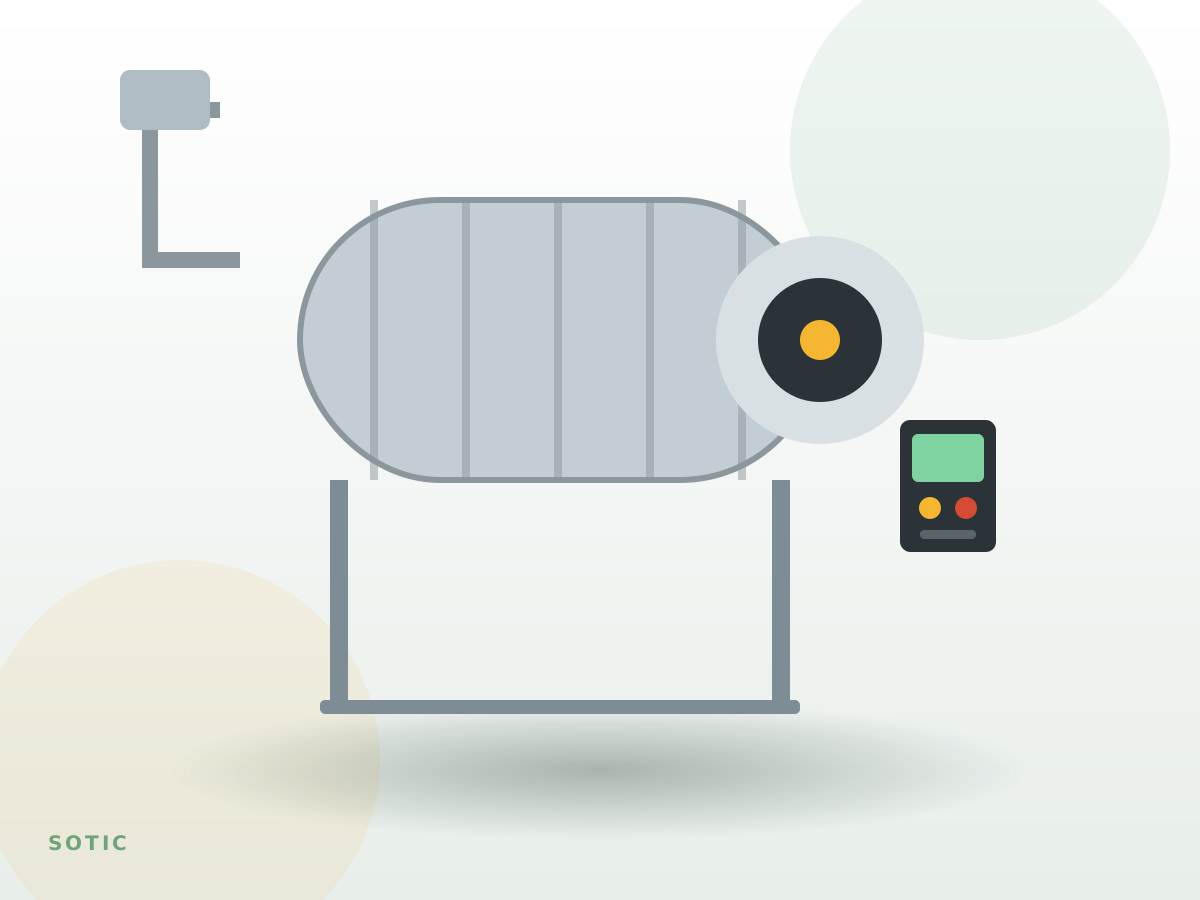
Cocoa & coffee roaster
Rotating drum with indirect heating, controlled roast curve and rapid cooling.
View the sheet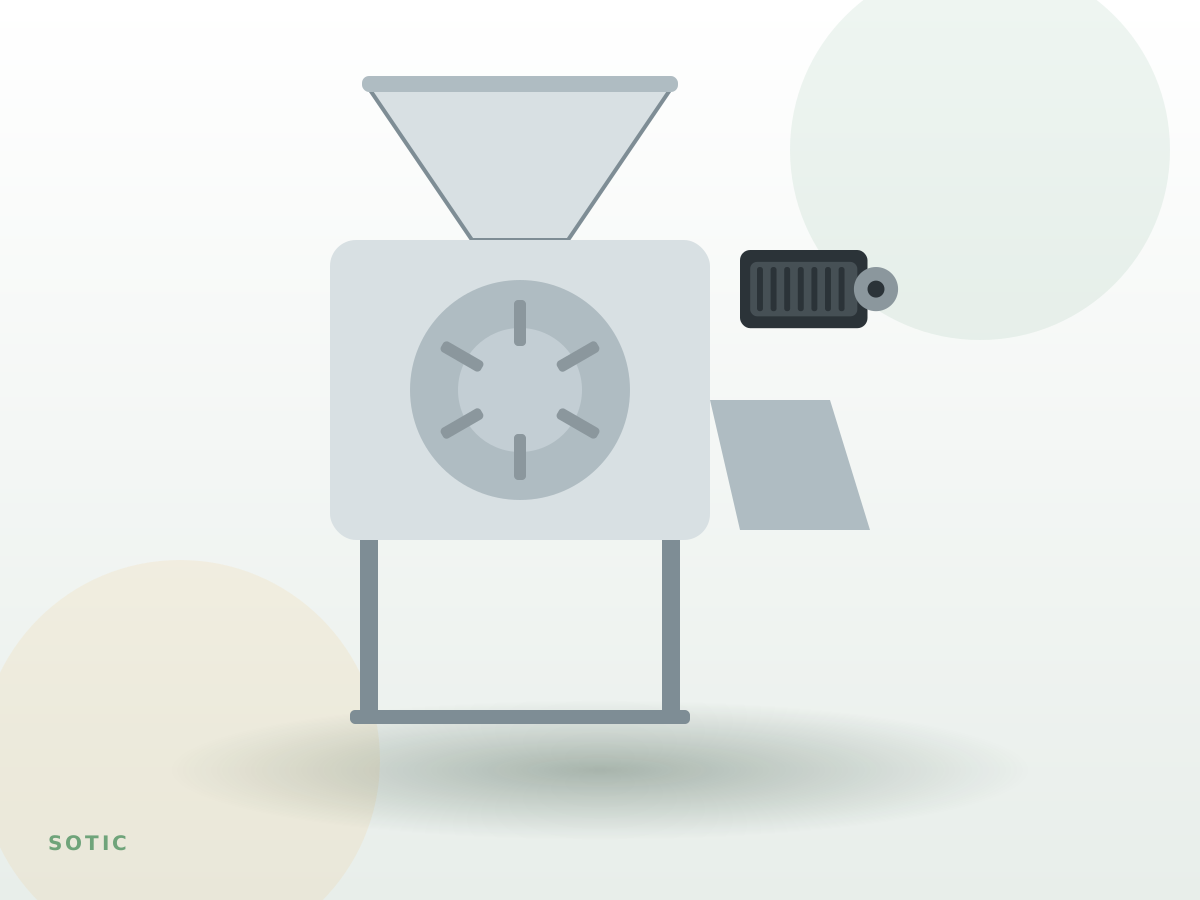
Cocoa liquor mill
Grinds nibs to liquor fineness with controlled heat build-up.
View the sheetEquipment for first and second processing
First-processing stations are aimed at cooperatives and collection centres; second-processing stations open access to higher value-added semi-finished products.
Mechanical pod breaker
Opens pods with toothed rollers at adjustable spacing and separates beans from husks, designed to limit injury to the cotyledon.
- Throughput 0.5 to 3 t pods/h
- Power 3 to 11 kW
- Adjustment roller spacing
- Outlet beans / husks separated
Coffee pulper
Pulping by rotor-screen friction with fine clearance adjustment, integrated washing and separate discharge of pulp to recovery or composting.
- Throughput 300 to 2,000 kg cherries/h
- Power 2.2 to 7.5 kW
- Water 1 to 3 m³/t
- Contact stainless / treated cast iron
Fermentation boxes
Modular boxes in rot-resistant timber or stainless tanks with a draining false bottom, insulated, covered and fitted with temperature probes for objective monitoring.
- Capacity 300 to 2,000 kg per box
- Drainage perforated false bottom
- Monitoring temperature probes
- Turning manual or mechanised
Indirect hot air dryer
Insulated chamber with racks or trolleys, hot air generator with exchanger, forced ventilation and partial recirculation. No contact between flue gases and beans.
- Capacity 500 to 3,000 kg/batch
- Temperature 45 to 60 °C
- Energy gas, biomass
- Final moisture 7 to 8 %
Drum roaster
Rotating drum with indirect heating, modulating burner, bean probe, extraction hood and ventilated cooling tray with stirring arm.
- Capacity 15 to 240 kg/cycle
- Temperature 110 to 230 °C by product
- Control set point + recorded curve
- Cooling ventilated, < 4 min
Cracker-winnower
Cracking of roasted beans then air separation of the shell in a winnowing column with adjustable air flow, with a cyclone recovering the shells.
- Throughput 100 to 800 kg/h
- Residual shell target < 1.5 %
- Power 3 to 11 kW
- Adjustment air flow and screens
Cocoa liquor mill
Grinding of nibs through successive passes (stones then fine mill), with a cooling circuit controlling the heating of the cocoa butter during the operation.
- Throughput 50 to 500 kg/h
- Target fineness < 30 µm
- Cooling water circuit
- Product contact AISI 304 stainless
Cocoa butter press
Hydraulic pot press separating butter and cake, with butter filtration and cake discharge to powder grinding.
- Load depending on model
- Pressure high hydraulic pressure
- Products butter + cake
- Status on specific study
Densimetric table and sorter
Separation of flat and broken beans and of foreign bodies by a combination of screening, aspiration and densimetric sorting before dispatch or processing.
- Throughput 0.5 to 3 t/h
- Power 1.5 to 5.5 kW
- Settings slope, vibration, air
- Outlets 3 to 4 fractions
The stations described above complement the catalogue machines: they are studied, adapted or manufactured on request according to the configuration of your line. The values shown are usual design ranges for this type of equipment; contractual characteristics are established project by project by the SOTIC design office and are not a commitment at this stage.
Four levers on the price paid at the gate
In these sectors the quality premium is measurable and documented by the buyer. Equipment is only worth having if it moves these criteria forward from one season to the next.
Complete fermentation
The proportion of well-fermented beans, measured by the cut test, is the first criterion for discount or premium. It depends on duration, turning and mass depth — three parameters the equipment makes repeatable.
Even moisture
A batch at a uniform 7.5 % moisture stores safely; the same batch with uneven moisture will develop mould pockets. Regularity matters more than the average value.
Cleanliness and foreign bodies
Stones, pod debris and germinated beans are penalised on arrival. Mechanical sorting handles volumes that manual sorting can no longer absorb above a certain tonnage.
Batch traceability
Identifying batches by origin, fermentation date and drying curve is not administrative burden: it is what allows a quality gap to be understood and corrected the following season.
The machine alone is not enough
Every coffee and cocoa project is treated as a whole: study, manufacturing, host building, commissioning, training and maintenance.
Sizing
Material and energy balance, process selection, target throughput, investment estimate and operating cost per tonne.
WORKSCivil engineering
Anchor blocks, slabs, effluent drainage, ventilation, separation of clean and dirty areas, electrical supply.
TRAININGLine operation
Operator training in settings, in-process quality checks and emergency stop procedures.
SERVICEMaintenance
Preventive maintenance plan, set of wear parts, corrective work and locally sourced spares.
coffee and cocoa: what to check before investing
Solar drying on sheltered racks gives excellent results when the season allows: it is slow, gentle and cheap in energy. The problem is guaranteed capacity in the rainy season, when batches stay wet for days and degrade. The most robust configuration combines the two: solar drying in favourable conditions, mechanical indirect hot air back-up when humidity demands it. The mechanical dryer is then sized on the harvest peak in unfavourable weather, not on the annual average tonnage.
Technically yes, since the temperature ranges partly overlap. Two reservations apply in practice: aroma carry-over between products, which demands careful cleaning between campaigns, and the difference in cadence. If both productions are regular and simultaneous, two dedicated machines are preferable; if one is seasonal and the other marginal, sharing is defensible.
There is no generic answer, but there is a hierarchy of decisions. The first step — pod breaking, controlled fermentation, drying, sorting — improves merchantable quality without changing trade: it has the best return on investment. The second step — roasting, cracking, grinding into liquor — moves you into food manufacturing, with its compliance requirements, packaging and commercial outlets to secure before buying the machine. We cost each step separately so the decision stays reversible.
From controlled drying to cocoa liquor
Describe your bean volume, the seasonality of the harvest and the product you are aiming at: we will propose the configuration matching the processing step you can sustain commercially.